These Small American Airports Look Like 1958 Called and Nobody Picked Up — and You Can Still Fly Into Them
Most American airports feel like variations on the same theme: the same retail chains, the same neutral carpeting, the same gate design that could belong to any decade since 1995. Which is exactly why stumbling onto a regional airport that hasn't changed since the Eisenhower administration hits you like a time warp you weren't expecting.
They exist. There aren't many of them. And aviation history enthusiasts have been quietly visiting them for years without making much noise about it.
Why These Buildings Survived When So Many Didn't
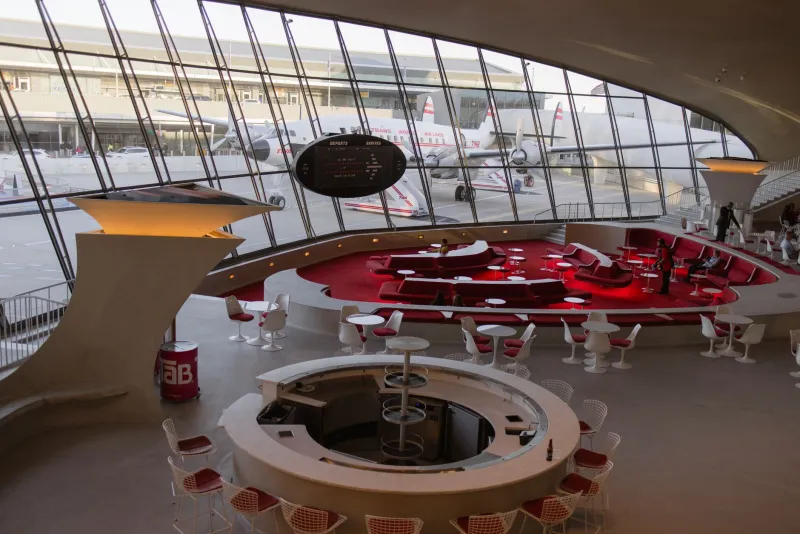
The story of mid-century airport architecture is mostly a demolition story. The postwar building boom produced some genuinely extraordinary terminal designs — swooping rooflines, dramatic cantilevered canopies, bold terrazzo floors in geometric patterns, ticket counters that looked like they belonged in a Streamline Moderne fantasy. Eero Saarinen's TWA Terminal at JFK is the famous example, now preserved as a hotel. But for every TWA Terminal, dozens of equally interesting smaller buildings got bulldozed when airports expanded or modernized.
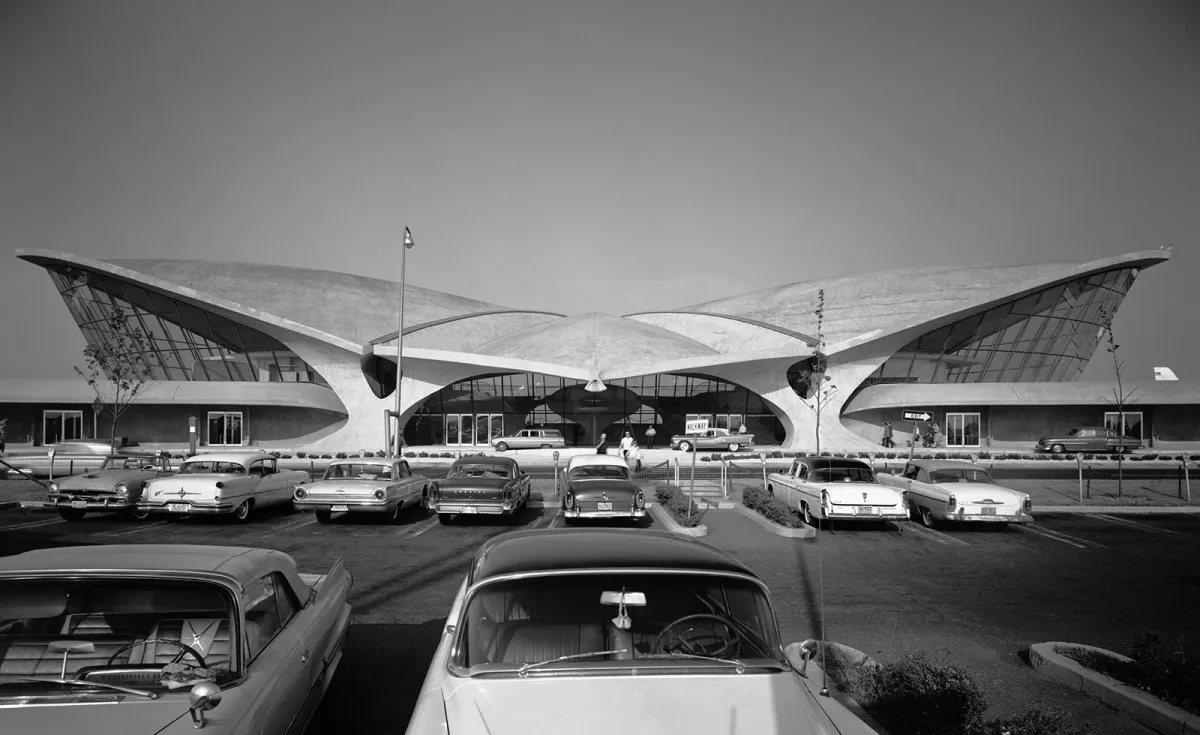 Photo: Eero Saarinen's TWA Terminal at JFK, via i0.wp.com
The ones that survived mostly did so by accident. They were too small to warrant expensive renovation. Their passenger volumes never justified the capital investment that would have triggered a rebuild. Some sat in communities where growth stalled and the airport just... stayed the same. A few were in regions where local pride in the original building was strong enough to generate preservation pushback when modernization came up.
The result is a scattered collection of operational mid-century terminals that most American travelers have never seen — and that you can actually fly into, not just visit as a museum.
A Few Worth Knowing About
Flagstaff Pulliam Airport (FLG), Arizona is a small but striking example. The terminal building dates to the early jet era and retains much of its original character — compact, unpretentious, and genuinely useful as a gateway to the Grand Canyon's South Rim, which is about 80 miles away. Flying into Flagstaff instead of Phoenix means you skip the two-and-a-half-hour drive north and land in a building that feels like a regional airport was supposed to feel before regional airports became identical.
 Photo: Grand Canyon, via greensmarteco.com
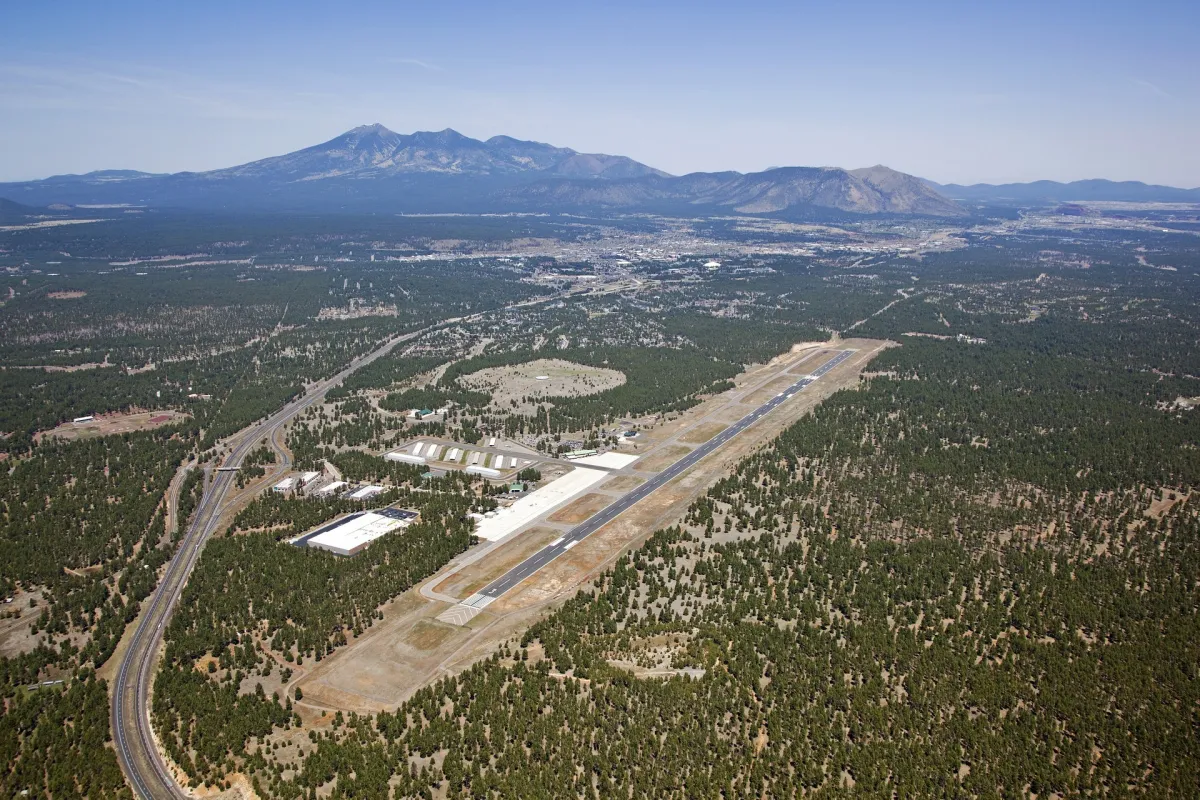 Photo: Flagstaff Pulliam Airport, via www.mercuryjets.com
Walla Walla Regional Airport (ALW), Washington has developed a bit of a cult following among wine tourists heading to eastern Washington's emerging wine country, but its terminal building is itself worth the detour. The low-slung mid-century structure feels almost residential in scale, with a quiet charm that larger airports abandoned decades ago.
Rhinelander-Oneida County Airport (RHI), Wisconsin is the kind of place that makes aviation enthusiasts genuinely emotional. The terminal is a textbook example of the small regional airport aesthetic of the early 1960s — modest, purposeful, and almost completely unchanged. Rhinelander is a gateway to Wisconsin's north woods lake country, which means the airport actually sees seasonal traffic from people who know exactly where they're going.
Hagerstown Regional Airport (HGR), Maryland has been on the radar of architectural preservation circles for years. Its terminal building is considered one of the better-preserved examples of its era on the East Coast, and it's close enough to Washington D.C. and Baltimore to make it a genuinely plausible alternative routing for travelers with flexibility.
The Experience Is Different in Ways That Are Hard to Describe
Part of what makes these airports interesting isn't just the architecture — it's the entire experience of moving through a building designed at a scale that assumes you're a person rather than a unit of passenger throughput.
Check-in at a small mid-century terminal often happens at a counter where the agent can see the whole building. Security, where it exists in any significant form, takes minutes rather than the kind of ritualized endurance test that major airports have normalized. Waiting for a flight means sitting in a room where you can see the tarmac, watch the ground crew, and hear the actual sounds of aircraft — not a sealed gate pod insulated from everything that makes aviation interesting.
The coffee is often from a local counter rather than a national chain. The staff frequently knows the regular passengers by name. The whole operation has a human scale that feels genuinely unusual in 2024.
How to Actually Route a Trip Through One
The practical challenge is that most of these airports are served by regional carriers operating under major airline code-shares, which means they show up in standard flight searches but often require a connection. The trick is to treat the small airport as a destination in itself rather than an inconvenience to be minimized.
Search for regional airports within a two-to-three-hour drive of your actual destination. Check whether they're served by American Eagle, SkyWest, or Cape Air — the regional operators most likely to serve smaller fields. Compare the total travel time including ground transportation against flying into the major hub. In many cases, the math is closer than you'd expect, and the experience is incomparably better.
Aviation forums like AirlinePilotForums and regional travel communities on Reddit maintain informal lists of airports worth visiting for their buildings alone. The enthusiasm in those threads is the kind that comes from people who've actually been there and want others to find it too.
Some discoveries are worth going slightly out of your way for. A terminal that still has its original 1961 terrazzo intact is one of them.