Before Supermarkets, Small Towns Shared a Pantry — and That Idea Is Making a Quiet Comeback
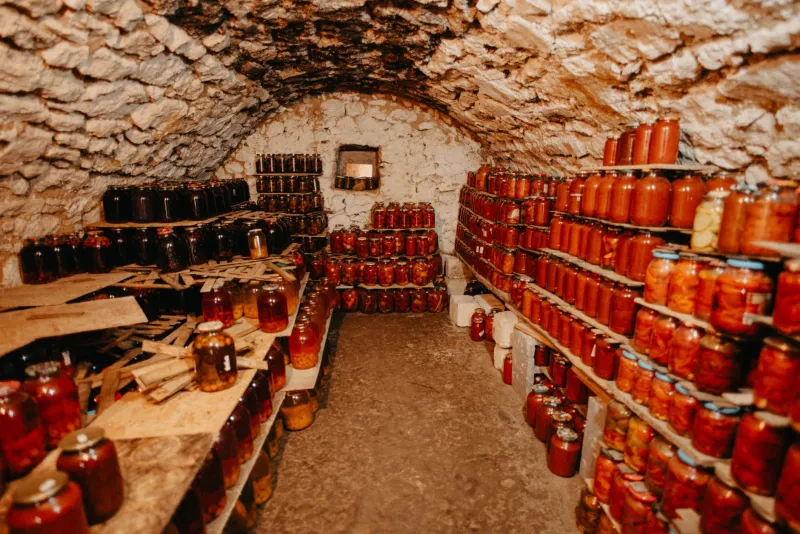
Somewhere between the invention of the Mason jar and the arrival of the A&P grocery chain, a whole chapter of American food history quietly disappeared. Most people have never heard of it. But for generations of rural Americans, the community larder wasn't just a convenience — it was survival infrastructure.
A Root Cellar That Belonged to Everyone
The concept goes back further than you might expect. In 18th and 19th century rural communities across New England, Appalachia, and the Midwest, small towns often maintained shared cold storage — root cellars, stone springhouses, or designated barn spaces — where families deposited surplus preserved goods and withdrew what they lacked. Think of it as a neighborhood pantry running on mutual obligation rather than currency.
The goods moving through these spaces were intensely practical: crocks of sauerkraut, dried beans, smoked pork, pickled vegetables, hard cider, dried herbs, rendered lard. Nobody was donating luxuries. What went in was what families could spare; what came out was what a neighbor genuinely needed to get through February.
The trust involved was enormous. There were rarely written ledgers. Contributions and withdrawals were tracked through memory, reputation, and community accountability. Families who took more than they gave were noticed. Families who contributed generously during good harvests earned standing that mattered when their own crops failed.
Historians who study rural American food systems sometimes call these arrangements "contributory commons" — shared resources maintained through informal social contracts rather than formal governance. They existed in dozens of variations: church basement pantries, Grange hall storage cooperatives, informal arrangements between neighboring farms. The specifics varied by region and community, but the underlying logic was the same everywhere.
Why It Disappeared
The community larder didn't die overnight. It eroded gradually across the early 20th century, squeezed from multiple directions at once.
Refrigeration changed home food storage dramatically. Canning technology became more accessible and individualized. Rural electrification in the 1930s brought freezers into farmhouses. And then the supermarket arrived — first in cities, then steadily spreading into small towns through the 1940s and 50s — offering a transaction-based alternative to communal exchange that required no social obligation, no reciprocity, no memory of who owed what to whom.
The convenience was real. But something got lost in the trade. The community larder wasn't just about food — it was a regular, practical reason for neighbors to be in relationship with each other's actual circumstances. You knew when the Hendersons had a bad harvest because you saw what they weren't contributing. You knew the widow on the edge of town was struggling because you noticed what she quietly withdrew.
When that infrastructure disappeared, so did a layer of mutual awareness that no social program has ever quite replaced.
The Modern Version Is Showing Up in Unexpected Places
Here's the part that surprises people: the idea never fully died. And right now, in towns and neighborhoods across the country, it's coming back in a recognizable form.
The "little free library" concept — those small wooden boxes of books in front yards — spawned a food-sharing cousin called the community free pantry, or "little free pantry." The structure is simple: a weatherproof box, mounted in a visible public spot, stocked by neighbors and open to anyone. Take what you need, leave what you can. No application, no means testing, no paperwork.
What started as an isolated idea in Fayetteville, Arkansas around 2016 has spread to thousands of locations in all 50 states. Some are elaborate cedar cabinets with glass doors. Some are repurposed newspaper boxes. Some are mounted outside churches, community centers, or private homes. The Pantry Map project has catalogued thousands of them, and the number keeps growing.
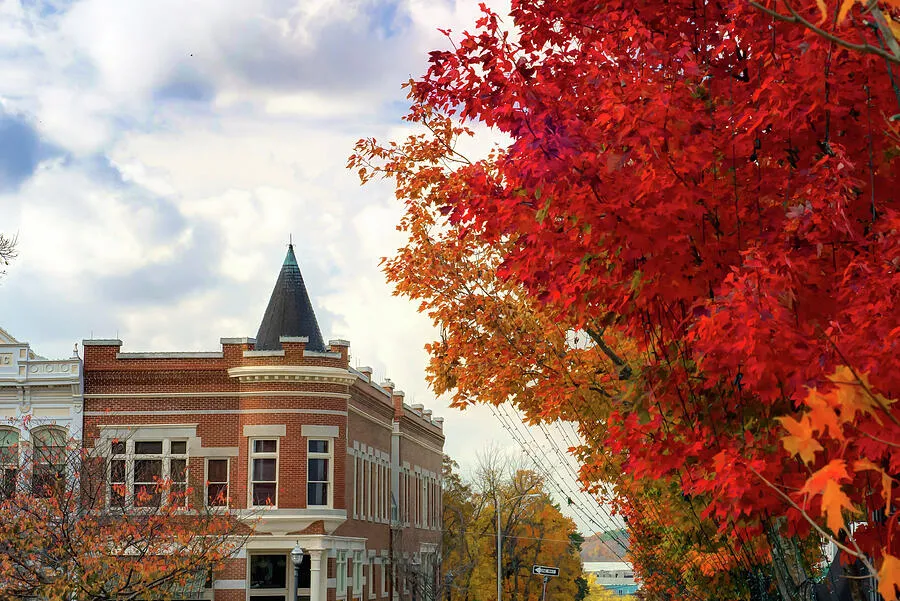 Photo: Fayetteville, Arkansas, via images.fineartamerica.com
But beyond the free pantry movement, something more organized is happening in certain rural communities. In parts of Vermont, western North Carolina, and the rural Midwest, food-sharing networks have emerged that look surprisingly close to the old contributory commons model — neighborhood-scale systems where participants contribute from gardens, foraging, and home preservation and withdraw what they need. Some run through mutual aid Facebook groups. Others operate through community supported agriculture co-ops that have added a sharing component. A few are genuinely informal, running on exactly the kind of social trust the old larders required.
Why This Matters More Than It Looks
Food security researchers have started paying attention to these networks, and what they're finding is interesting. Hyperlocal food sharing systems turn out to be surprisingly resilient during supply chain disruptions — the kind that emptied grocery store shelves in early 2020 in ways that rattled a lot of people who had never thought much about where their food actually came from.
But there's a social argument too, beyond the practical one. The community larder, in all its forms, creates what sociologists call "weak tie" relationships — the kind of low-stakes, regular contact between neighbors that turns out to be disproportionately important for community wellbeing. You don't need to be close friends with your neighbors to benefit from knowing them. You just need regular, practical reasons to interact.
A shared pantry — whether it's a stone springhouse in 1840s Ohio or a cedar box on a front lawn in 2024 — turns out to be a surprisingly effective generator of exactly that.
The remarkable thing isn't that the idea is coming back. It's that it was ever forgotten in the first place.