Your Pulse Knows Things Your Smartwatch Doesn't — Doctors Are Finally Saying So
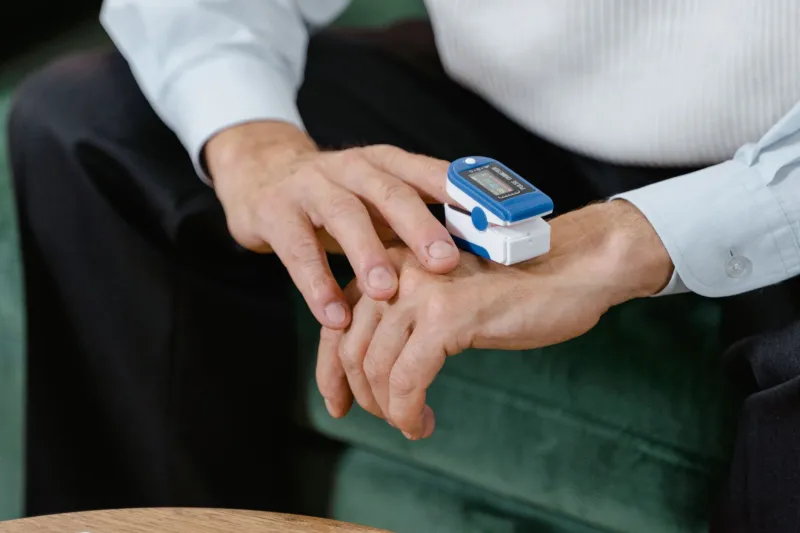
Somewhere between the invention of the stethoscope and the rise of the Apple Watch, we stopped listening to our own bodies and started outsourcing that job to devices. But here's the thing: before any of that technology existed, ordinary people — not just physicians — could interpret a pulse well enough to gauge their own stress levels, fatigue, and general health. It was a skill. A practiced, teachable, genuinely useful skill. And it almost completely disappeared.
Now, quietly and without much fanfare, it's coming back.
What Pulse-Reading Actually Was
Most of us think of checking our pulse as counting beats per minute and calling it a day. But traditional pulse assessment — practiced in both Western medicine and ancient healing systems like Ayurveda and Traditional Chinese Medicine — went much deeper than that. Practitioners were trained to notice rhythm, depth, tension, and what physicians once called quality.
A healthy pulse felt different from an anxious one. A pulse under physical strain had a different character than one weakened by illness. Nineteenth-century medical texts described dozens of distinct pulse types — bounding, thready, wiry, slippery — each pointing toward something specific happening inside the body. Doctors trained their fingertips the way musicians train their ears.
This wasn't mysticism. It was careful, accumulated observation. And for most of human history, it was one of the most reliable diagnostic tools available.
How Technology Made the Skill Invisible
The sphygmomanometer — the blood pressure cuff — arrived in widespread clinical use in the early 20th century. From there, the march of monitoring technology never really stopped. EKGs, pulse oximeters, Holter monitors, and eventually consumer wearables turned cardiovascular measurement into something machines did for you.
That's largely a good thing. Precision matters in medicine. But something got lost in the trade-off. When external devices became the authority on how your heart was behaving, the internal awareness that generations of people had cultivated started to erode. Patients stopped being trained observers of their own bodies. Physicians stopped teaching them to be.
By the late 20th century, pulse-reading as a patient skill had essentially vanished from mainstream American healthcare. It lingered in yoga studios and integrative medicine clinics, but it felt more like wellness culture than genuine medical practice.
Why Practitioners Are Bringing It Back
Here's what changed: the conversation around stress, nervous system regulation, and body awareness has shifted dramatically in the last decade. Researchers studying heart rate variability — the slight variation in time between heartbeats — have found it to be a surprisingly powerful indicator of stress load, recovery quality, and even emotional state. High variability is generally a sign of resilience. Low variability often signals that the body is under strain.
You don't need an expensive device to get a rough read on this. You need attention.
A growing number of integrative physicians, physical therapists, and mindfulness educators are now teaching patients a modernized version of pulse literacy — not as a replacement for clinical monitoring, but as a layer of self-awareness that technology can't fully provide. The goal isn't to diagnose disease. It's to recognize patterns.
Dr. Victoria Sweet, a physician and author who has written extensively about slow medicine, has argued that the act of taking a patient's pulse by hand — something most doctors no longer do routinely — provides information about the whole person that a readout simply doesn't capture. Several medical schools have started reintroducing manual pulse assessment into their curricula, not as nostalgia, but as a corrective to over-reliance on screens.
What You Can Actually Learn
So what can an untrained person realistically pick up from their own pulse? More than you might expect.
Resting heart rate, taken first thing in the morning before you've had coffee or checked your phone, is one of the most honest indicators of recovery and stress load available. A rate that's consistently five to ten beats per minute higher than your personal baseline often signals that your body is working harder than usual — fighting something off, processing a stressful week, or simply not sleeping well enough.
Beyond rate, there's rhythm. A pulse that feels irregular — skipping, doubling up, or stuttering — is worth paying attention to, though occasional irregularities are often harmless. And there's tension: a pulse that feels tight and hard under your fingertips often correlates with elevated blood pressure and sympathetic nervous system activation, the biological signature of stress.
None of this replaces a doctor's visit. But it can tell you when one might be worth scheduling.
The Quiet Revival
What makes this revival interesting is how low-tech and low-cost it is. No subscription required. No device to charge. Just two fingers, a few minutes, and enough quiet to actually pay attention.
Some yoga instructors now open classes with a brief pulse check — not to count beats, but to notice quality and presence. Certain integrative health coaches teach clients to track morning pulse as a daily check-in, the way others track sleep or mood. A handful of apps have emerged that guide users through manual pulse assessment and help them log patterns over time, bridging the old skill with modern habit-tracking.
There's something almost countercultural about it in an era of constant biometric monitoring. The idea that your own fingertips might be a reliable instrument — that paying attention, slowly and regularly, might actually tell you something true — feels like a small act of reclaiming something.
Your body has been broadcasting this whole time. Most of us just forgot how to tune in.