They Mailed a Whole Bank, Brick by Brick — and the Post Office Had No Idea What to Do About It
Somewhere in the early 1900s, a banker in Vernal, Utah, sat down and did some math. The nearest railroad didn't come close to his town. Freight wagons were expensive. But the US Postal Service? The postal service went everywhere — and for a brief, bewildering moment in American history, it had almost no restrictions on what you could send through it.
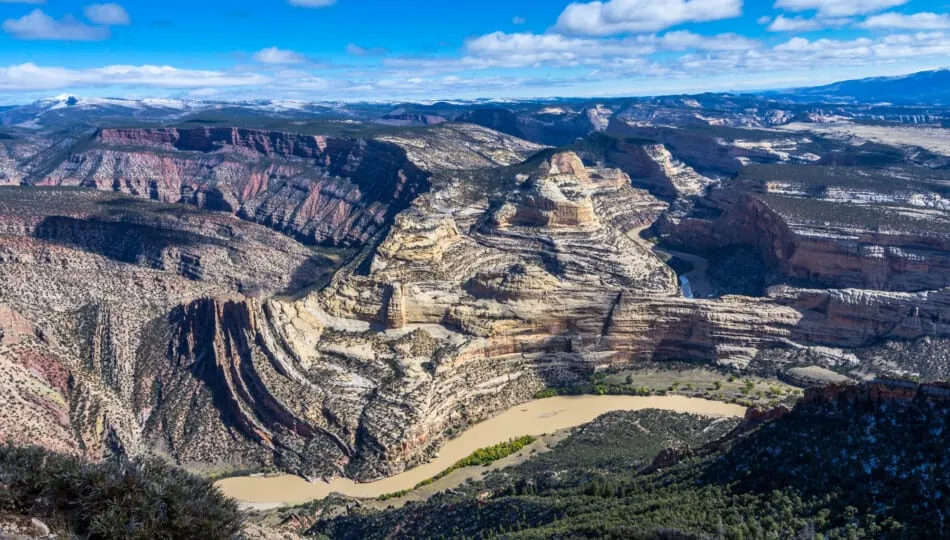 Photo: Vernal, Utah, via americanswobsessed.com
So he mailed his bank. Not all at once, obviously. But brick by brick, parcel by parcel, the building materials for the Bank of Vernal traveled through the United States mail system, legally, at rates far cheaper than any freight company would have charged. Postal workers reportedly had no idea what they were handling until the deliveries started stacking up.
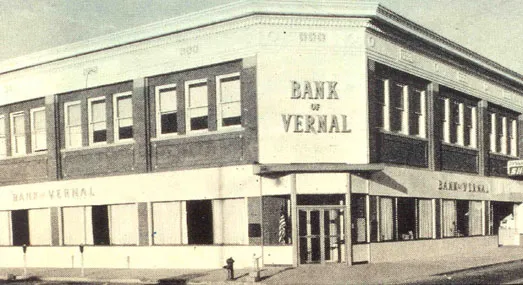 Photo: Bank of Vernal, via blogger.googleusercontent.com
This is the story of the most absurd loophole in American infrastructure history — and the wonderfully stubborn ingenuity of the people who found it.
The Brief, Beautiful Chaos of Early Parcel Post
Before 1913, the US Postal Service didn't offer parcel post at all. You could send letters, newspapers, and small packages, but large goods traveled by private freight companies — and those companies charged whatever they liked, which was often a lot. Rural communities, far from rail lines and dependent on distant suppliers, got squeezed hardest.
When Congress finally authorized parcel post in January 1913, it opened a door nobody had fully thought through. Suddenly, Americans could mail packages up to 11 pounds (later expanded) at flat, affordable rates. The rules were vague. The oversight was minimal. And the American entrepreneurial spirit, never exactly shy, immediately started looking for edges.
Farmers mailed live chickens. A baby was famously mailed in Ohio — twice — before postal authorities clarified that human beings were not, in fact, packages. Banks mailed gold coins. And in Vernal, Utah, a construction project quietly became a landmark case in creative logistics.
The Vernal Brick Incident
The Parcel Post Bank, as it came to be known, wasn't built by mailing bricks one at a time in a casual, disorganized way. This was a calculated operation. Local businessman W.H. Coltharp needed building materials and faced brutal freight costs to get them from Salt Lake City. Parcel post rates, however, were dramatically cheaper — so he ordered roughly 80,000 pounds of brick and had them shipped in small parcels across the roughly 197 miles to Vernal.
 Photo: Salt Lake City, via saltlakecitytrek.com
Postal workers in Salt Lake City loaded wagon after wagon. Vernal's post office was briefly overwhelmed. The postmaster general, once he heard about it, was not amused. But it was legal. The building went up. And Coltharp reportedly paid a fraction of what conventional freight would have cost.
The postal service responded by quietly tightening the rules — limiting the total weight a single sender could ship to one address in a single day. The loophole, brilliant while it lasted, was stitched shut.
It Wasn't Just Bricks
Vernal got the headlines, but it was far from alone. Across rural America, the early parcel post years produced a parade of creative workarounds that modern logistics companies would find both inspiring and horrifying.
Small-town merchants shipped furniture in disassembled sections. Farmers sent agricultural equipment piece by piece to avoid freight surcharges. There are documented cases of entire sets of cast-iron stove parts arriving at rural post offices over a period of weeks, each parcel carefully sized to stay within the weight limit. The cumulative effect — a fully functional stove assembled from legally mailed components — was perfectly within the rules.
One of the stranger episodes involved a Colorado family who mailed their daughter to her grandparents' farm when the parcel post rules were still new enough that nobody was quite sure what counted as a prohibited item. She was insured for $50. She arrived fine.
What This Actually Tells Us
Beyond the sheer comedy of it, the brick-by-brick building era reveals something genuinely interesting about how Americans have always related to expensive, inconvenient systems: with cheerful, determined workarounds.
The freight companies of the early 1900s held enormous power over rural communities. Without competitive alternatives, they could — and did — charge prices that made basic commerce difficult. When the postal service accidentally created a cheaper option, people didn't wait for permission to use it. They figured out the rules, did the math, and got to work.
That instinct — find the gap, use it before anyone closes it — shows up throughout American economic history. It's in the legal grey zones of early radio broadcasting, in the improvised financing schemes of Depression-era towns, in a dozen other moments when official systems failed ordinary people and ordinary people improvised.
The Loophole Closes, the Spirit Doesn't
By 1914, the postal service had tightened its parcel post regulations enough to make large-scale construction shipping impractical. The window was open for barely a year. But in that year, Americans shipped an almost unbelievable range of objects through the mail, tested the limits of what a public service could be asked to carry, and in at least one case, built a functioning bank out of the gap between what the rules said and what they meant.
The Bank of Vernal building still stands today, by the way. It's been repurposed over the decades, but the structure is there — a monument to one man's determination to find a cheaper way, and to a brief moment when the US mail system accidentally became the most useful construction supply chain in the American West.
Some discoveries are remarkable because they changed the world. This one is remarkable because it's a reminder that the most creative problem-solvers in history weren't always engineers or inventors. Sometimes they were just people with a big order of bricks, a postal rate chart, and a very patient postmaster.