While You Wait for Your Socks to Dry, Someone Put a Library in the Laundromat
The average laundromat visit takes about an hour and twenty minutes. You load the machine, you wait, you move things to the dryer, you wait some more. There's not a lot to do. Most people stare at their phones. Some watch whatever's playing on the wall-mounted TV. A few just sit.
For decades, that hour and twenty minutes was considered dead time — an inconvenience to be endured, not a resource to be used. Then someone noticed that laundromats are, in a very specific and underappreciated way, one of the best reading environments in America. You're already sitting down. You're not going anywhere. You have nothing urgent to do. And unlike a library or a bookstore, you didn't choose to be there — which means the books find you, rather than the other way around.
That observation, modest as it sounds, turned into something genuinely remarkable.
The Waiting Room Nobody Thought to Use
Laundromats have always occupied a particular place in American community life. They're one of the few genuinely public spaces left — not commercial in the way a coffee shop is, not institutional in the way a government office is. You pay to use the machines, but nobody is selling you anything else, nobody is asking you to leave, and the mix of people in any given laundromat on a Saturday morning is usually a pretty honest cross-section of a neighborhood.
About 35 million Americans use laundromats regularly, according to the Coin Laundry Association. A disproportionate number of them live in urban areas, earn lower incomes, and — this is the part that matters — have children. The average laundromat customer isn't a college student doing weekend chores. It's often a working parent, dragging two kids and three weeks of laundry to the nearest machine, trying to get through the morning.
For literacy advocates, that profile is significant. Children in lower-income households are statistically less likely to have books at home and less likely to visit public libraries regularly. The barriers aren't always obvious — it's not that families don't value reading, it's that libraries have hours, require cards, and involve a separate trip. Laundromats are already part of the routine.
The Woman Who Started Thinking About It Differently
The organized laundromat literacy movement has several origin points, but one of the most cited is the work of Leah Esguerra, a social worker in San Francisco who began placing books and reading materials in laundromats in the Tenderloin neighborhood around 2010. Her approach was simple: put books where people already are, make them free to take, and don't make anyone feel like they're participating in a program.
 Photo: San Francisco, via www.fodors.com
The Tenderloin is one of San Francisco's most economically stressed neighborhoods, with a high concentration of families in temporary housing, single-room occupancy hotels, and crowded apartments — many of which don't have in-unit laundry. The laundromats there were busy, consistent, and full of kids with nothing to do while their parents waited.
Estguerra's initial effort was informal — a small shelf, some donated books, no fanfare. But families started taking the books. Kids started reading while they waited. Parents started asking if there would be more. The shelf grew into a program, the program attracted attention, and eventually the idea started spreading to other cities, carried by social workers, librarians, and community organizers who recognized what she'd found.
Spin Cycle Story Time
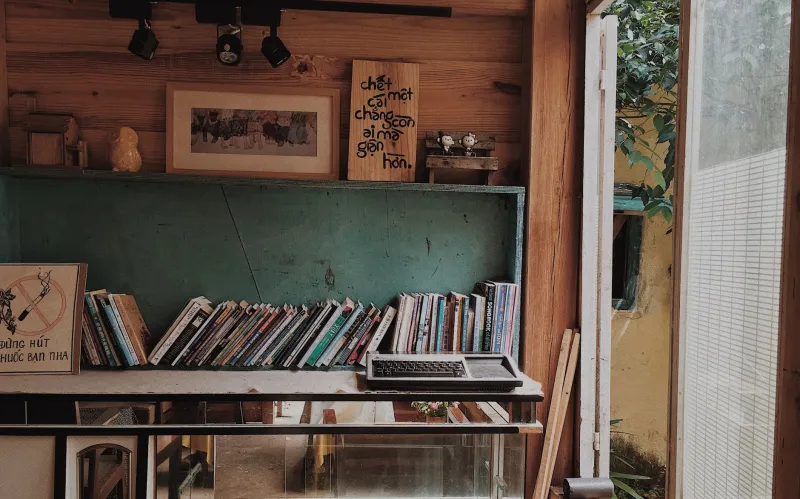
What's developed since then isn't one unified movement so much as dozens of parallel experiments, each adapted to its local community. In Detroit, a nonprofit called Laundry Care has combined free laundry access with on-site reading programs for children. In Washington, D.C., and Baltimore, programs run by library systems have placed book collections in laundromats and staffed them with volunteers during peak hours on weekends. In smaller cities across the Midwest and South, individual librarians and teachers have quietly stocked laundromat shelves on their own time, with donated books and handwritten labels.
The formats vary. Some programs focus on children's books and early literacy. Others stock a general collection — paperback fiction, how-to guides, community resource pamphlets. A few have added bilingual materials for neighborhoods with large Spanish-speaking populations. Some have installed Little Free Library boxes outside the buildings; others maintain full indoor shelves.
What they share is the core insight: you don't have to convince anyone to come to the books. You just put the books where the people already are.
Why It Actually Works
Education researchers have a term for the phenomenon these programs tap into: "incidental learning" — the acquisition of knowledge and skills that happens not through deliberate study but through exposure during unrelated activities. The idea is well-documented in early childhood development, where children who grow up in environments rich with books and conversation develop stronger literacy skills regardless of whether anyone sat down and formally taught them.
Laundromats, it turns out, are incidental learning environments hiding in plain sight. A child who spends an hour a week in a laundromat with a shelf of picture books is getting something like fifty hours of book exposure per year — in a relaxed setting, without pressure, while their parent is nearby and available to read with them. The conditions are, in some ways, better than a library program, because there's no performance anxiety, no schedule to keep, no sense that reading is a task.
Several small studies have supported what the practitioners already suspected: children in laundromat literacy programs show measurable improvements in reading readiness. Parents report that their kids ask to go to the laundromat specifically because of the books. Some families have started arriving early to get more reading time in before the machines are needed.
The Overlooked Venue That Keeps Delivering
There's something quietly subversive about the laundromat library idea — the notion that one of the most effective reading spaces in a community might be the one place nobody thought to look. Libraries are designed for reading. Schools are designed for learning. Laundromats are designed for washing clothes. And yet, precisely because no one is trying to make the laundromat into something it isn't, the books there carry no pressure, no obligation, no institutional weight.
You pick one up because you're bored and it's there. That's it. And sometimes that's exactly the right reason.
The programs are still growing, still mostly grassroots, still largely invisible to the broader conversation about literacy and community investment. But in laundromats across the country, on shelves between the detergent vending machines and the plastic chairs, something genuinely useful is happening — one spin cycle at a time.