Your Neighbor Once Knew How to Fix Your Pipes — and Charged You Almost Nothing for It
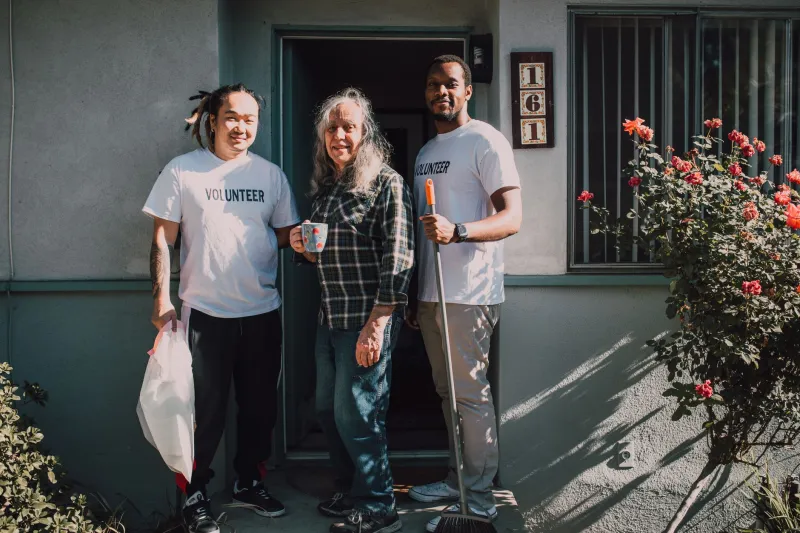
Here's a scenario that sounds completely foreign today: you need a wall plastered, so you walk three houses down, knock on the door, and ask Frank — who used to work construction — if he'd take a look. Frank says sure, and in exchange, you spend an afternoon helping him wire a new outlet in his garage, because your brother taught you electrical basics years ago. No app, no invoice, no liability waiver. Just two neighbors trading what they knew.
That wasn't an unusual arrangement in mid-20th century America. It was, in many places, just how things worked.
The informal skill-sharing economy that existed in American towns and urban neighborhoods before the 1970s is one of those things that's easy to romanticize — but it was also genuinely functional in ways that are worth understanding, especially now that hiring a contractor for basic home repairs can run you hundreds of dollars before anyone's even looked at the problem.
The Mechanics of the Neighborhood Trade Circle
These networks went by different names in different places — trade circles, skill swaps, labor exchanges, neighbor pools — and they operated with varying degrees of formality. At the most casual end, they were simply the way people in tight-knit communities helped each other out, with a loose understanding that favors would be returned.
But in some towns, particularly in the 1930s and 40s, these arrangements became more organized. Labor exchange clubs appeared in several Midwestern cities during the Depression, when cash was scarce but skilled hands were not. Participants would register their abilities — carpentry, sewing, bookkeeping, plumbing, electrical work, auto repair — and the exchange would match people with needs to people with skills. Payment was tracked in hours or points rather than dollars, creating a parallel economy that worked around cash scarcity.
Historians who study the Depression era have documented these exchanges in cities like Cincinnati, Kansas City, and Minneapolis, but they existed in smaller towns too, often organized through churches, labor unions, or civic clubs like the Grange. The infrastructure was simple: a ledger, a contact list, and enough trust to make the whole thing function.
After WWII, as the economy recovered and cash became more available, many of these formal exchanges dissolved. But the informal version — neighbors trading skills over fences and at block parties — persisted well into the 1960s in many communities.
What Made It Work (and Why It Faded)
The key ingredient in these arrangements wasn't altruism. It was density — both physical and social. When you lived close to the same people for decades, you knew who had what skills, who was reliable, and who you could trust to come back and finish the job. Reputation was everything, and in a neighborhood where everyone knew everyone, reputation was easy to verify.
Suburbanization chipped away at exactly that foundation. As Americans spread out into car-dependent subdivisions, the density of neighbor relationships thinned. You might live next to someone for ten years without ever learning what they did for a living, let alone what they could fix. The social fabric that made informal skill exchange possible — that sense of knowing your neighbors as whole people — became harder to maintain.
Professionalization played a role too. Licensing requirements for trades expanded significantly in the postwar decades. By the 1970s, doing electrical work for pay without a license was illegal in most states, even if the work was excellent. The informal skill economy didn't disappear overnight, but it got pushed further underground, or simply stopped happening.
And then there's the liability culture. At some point, the casual understanding that Frank would plaster your wall in exchange for an afternoon of electrical help got complicated by the nagging awareness that if something went wrong, someone might sue someone. That anxiety — even when mostly theoretical — has a way of cooling informal arrangements.
The Quiet Revival Happening Right Now
Here's what's interesting: in the same era that gave us TaskRabbit and the gig economy, a small but growing number of communities are deliberately reconstructing the old model — minus the apps, the service fees, and the algorithmic middlemen.
Time banks, which operate on the same hour-for-hour exchange logic as the Depression-era labor exchanges, have been growing steadily in the US since the 1990s. The concept is simple: one hour of your time is worth one hour of someone else's time, regardless of what skill is being exchanged. A retired electrician and a college student who's good at web design are trading equals. There are now hundreds of active time banks operating across the country, and many of them are heavily weighted toward practical household skills — exactly the kind of work that used to flow through neighborhood trade circles.
In Vermont, a community skill-share network in Burlington has been running since 2012, connecting residents who want to trade specific competencies without any cash changing hands. In Austin, a neighborhood association in East Austin has built an informal directory of residents willing to offer skills in exchange for barter, intentionally modeled on pre-gig-economy community exchange traditions.
These aren't massive movements. But they're real, and they're growing in places where contractor costs have become genuinely prohibitive for working- and middle-class homeowners.
The Thing Nobody Mentions About the Gig Economy
The gig economy solved a real problem: it made it easy to find someone with a specific skill on short notice. But it also formalized and monetized something that used to happen between people who knew each other — and in doing so, it extracted a significant cut from both parties while eliminating the social relationship that made the exchange meaningful.
When Frank plastered your wall and you helped him with his wiring, you both walked away knowing each other a little better. You had a reason to wave when you saw each other. You'd built something that wasn't on the invoice.
That's not nothing. And it turns out a few people remember it was there.