The Neighborhood Bee Men Who Quietly Fed America — And Almost Disappeared Without Anyone Noticing
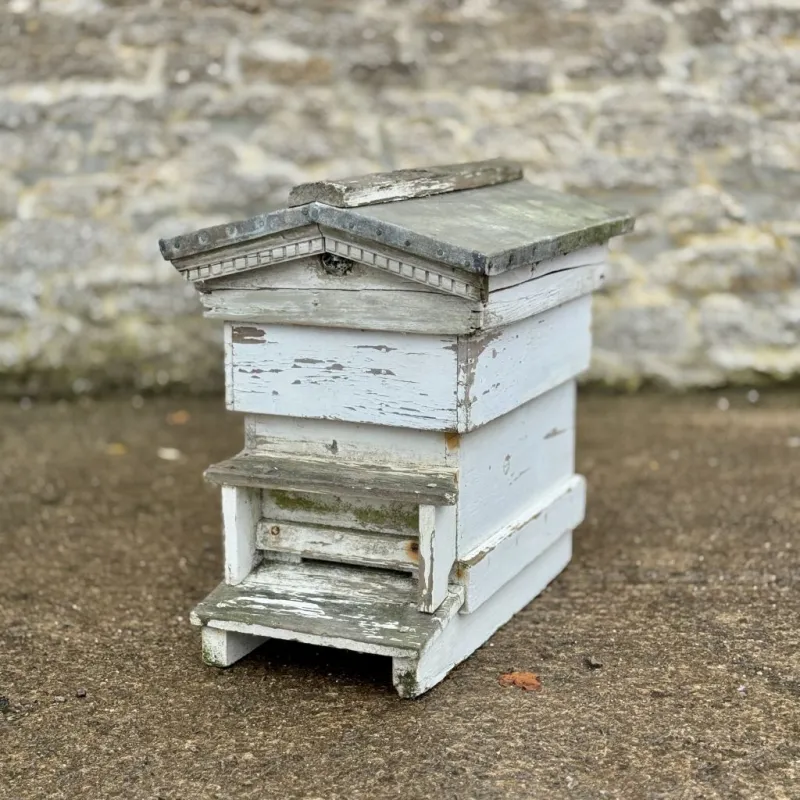
Photo: backyard beekeeper wooden hive suburban garden vintage, via pastandcurious.co.uk
Somewhere in a box of old photographs, there's probably a picture of a man in a straw hat and a loose veil, standing next to a wooden hive in a backyard that looks nothing like a farm. He's not a scientist. He's not a commercial operator. He's just a guy who kept bees — the way his father did, the way his neighbor did, the way half the block did back when that was simply what people did.
For most of the 20th century, backyard beekeeping wasn't a hobby. It was infrastructure.
A Living Network Nobody Mapped
Before the rise of industrial pollination — the practice of trucking millions of managed honeybee colonies across the country to service monoculture crops — America's pollination system was distributed, local, and surprisingly sophisticated. Backyard beekeepers in suburban neighborhoods and small towns maintained hives that served kitchen gardens, fruit trees, and community orchards. They shared queens, traded genetic stock, and passed down knowledge about local forage plants through informal conversations over back fences.
What they were building, without any corporate oversight or government program, was something ecologists now call a "distributed pollinator network" — a patchwork of small colonies spread across diverse landscapes, each adapted to local conditions and each genetically distinct from the next. Researchers who have gone back and looked at historical beekeeping records from the early and mid-1900s have found that this patchwork was remarkably effective at maintaining genetic diversity among honeybee populations. Different neighborhoods had different strains. Different strains had different resistances. The whole thing functioned like a living, breathing insurance policy against disease and collapse.
And almost nobody was paying attention to it, because it didn't look like a system. It just looked like neighbors doing a thing.
What Consolidation Erased
The shift happened gradually, then suddenly. Post-World War II agricultural consolidation pushed farms toward larger, single-crop operations. Those operations needed pollination at scale — more bees, faster, in one place at one time. Commercial beekeeping operations scaled up to meet the demand, and as they did, the informal backyard networks that had sustained local food systems for generations started to seem quaint. Unnecessary, even.
Chemical agriculture didn't help. The widespread adoption of pesticides — particularly neonicotinoids, which became commercially dominant in the 1990s — hit small-scale beekeepers especially hard. Unlike large commercial operators who could afford to move their hives away from treated fields, backyard beekeepers were stuck. Their bees foraged where they foraged. The losses were quiet, gradual, and largely unrecorded.
By the early 2000s, Colony Collapse Disorder was making national headlines, but the story being told was almost entirely about commercial operations. The backyard networks that had once provided a genetic buffer against exactly this kind of crisis had already been hollowed out. The diversity was gone. The knowledge was scattered.
What survived existed mostly in the memories of older beekeepers who had learned from older beekeepers, a chain of living expertise that was one generation away from breaking entirely.
The People Quietly Rebuilding It
Here's the part that doesn't make the news much: they're rebuilding it.
Across the country, small beekeeping guilds and urban apiary collectives have been quietly doing what their grandparents did — sharing queens, trading local genetic stock, and building informal networks of knowledge that don't depend on any single supplier or corporation. Groups like the Backwards Beekeepers in Los Angeles and similar organizations in cities from Portland to Chicago have been operating for years on the premise that local bees, adapted to local conditions, are worth preserving and propagating.
Some of these groups have gotten sophisticated about it. They're mapping forage corridors — the routes bees travel between food sources — and working with urban planners to protect or create green spaces along those paths. Others are cataloging hyper-local bee genetics before they disappear, partnering with university entomology departments to preserve what's left of regional diversity.
The language they use is modern. The concept is old.
Why This Matters Beyond the Hive
The story of America's backyard beekeeping networks is, in a lot of ways, a story about what happens when distributed, community-maintained systems get replaced by centralized, industrial ones. The centralized version is more efficient at scale. It's also more fragile. When something goes wrong in a centralized system, it goes wrong everywhere at once.
The backyard beekeepers didn't know they were building resilience. They were just keeping bees the way people kept bees. But that distributed, locally adapted, knowledge-sharing network turned out to be one of the most robust pollination systems the country ever had — and it operated entirely without a business model.
There's something worth sitting with in that. Not a nostalgic argument for going backward, but a genuine question about what we gave up when we decided that bigger and more centralized was always better.
The bees knew something. The people who kept them knew something too. And a growing number of people in backyards across the country are remembering it.