Before the Kindle, Before Netflix — America Briefly Had Book Vending Machines, and They Were Brilliant
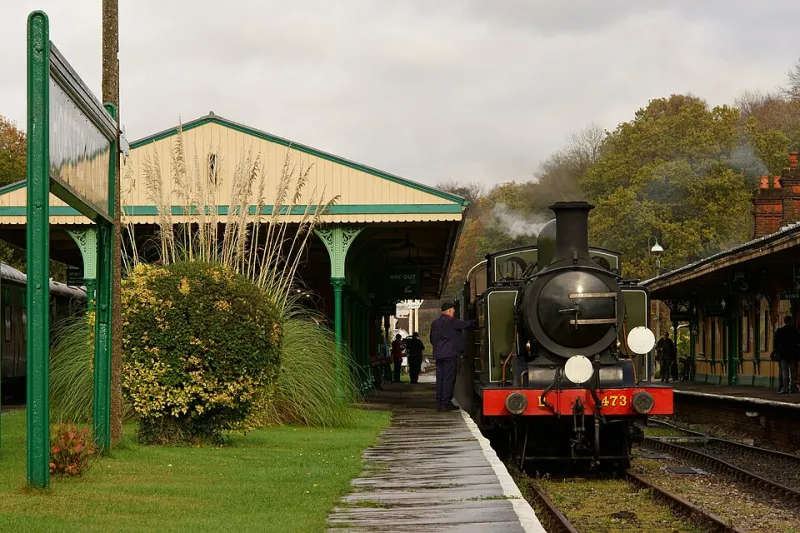
Photo: Peter Trimming , CC BY-SA 2.0, via Wikimedia Commons
The next time someone tells you that the subscription content economy is a product of the digital age, remember this: in 1934, a traveler passing through a busy American train station could walk up to a coin-operated cabinet, deposit a small fee, and walk away with a novel to read on the train — with a return slot waiting at the other end of the journey.
The machine would give them a book. The book would give them three hundred miles of entertainment. And the whole thing operated without a librarian, a checkout desk, or a monthly billing cycle.
This was not a prototype. It was a functioning commercial system. And almost nobody remembers it.
The Machines That Read the Room
The automated book rental concept emerged in the late 1920s and hit its stride in the early 1930s, driven by a simple observation: people waiting for trains were bored, and bored people with time on their hands would pay for something to read. Coin-operated lending machines — sometimes called "book-o-mats" in contemporary trade publications, though the naming was inconsistent — appeared in train stations in cities including Chicago, Philadelphia, and New York, as well as in hotel lobbies and airport waiting areas as commercial air travel began its early expansion.
The mechanics varied by operator, but the basic model was consistent: a customer paid a small rental fee (typically a nickel or a dime), received a popular novel or magazine collection, and was expected to return it — either to the same machine or to a partner location — within a set period. Some systems used a deposit model, returning a portion of the fee upon the book's return in acceptable condition. Others operated on the honor system, banking on the fact that most travelers didn't want to carry extra weight home.
The inventory skewed heavily toward popular fiction — mysteries, westerns, romances, and the adventure serials that dominated popular reading in the interwar period. These were not lending libraries for serious literature. They were entertainment dispensaries, calibrated precisely to what a tired traveler actually wanted.
Why It Worked
The genius of the system was its fit with the specific context of transit. Train travel in the 1930s involved long waits, long rides, and the particular kind of restless attention that comes from being in motion without anything to do. Bookstores existed in many stations, but buying a book felt like a commitment — you'd own it, carry it, figure out what to do with it later. Renting was lighter. More casual. More suited to the temporary nature of the journey itself.
For a brief window, the automated book rental machine was genuinely popular. Operators reported strong return rates (people, it turned out, were more honest about returning rented books than anyone expected), and the model attracted enough investment that several companies attempted to scale it into national networks.
Sound familiar? It should. The core mechanics — rent, consume, return, low commitment — are the same mechanics that made Blockbuster work in the 1980s, that made Redbox viable in the 2000s, and that underpin every streaming subscription service operating today. The format changes. The logic doesn't.
What Killed It
The automated book rental machine didn't fail because readers rejected it. It was squeezed out by a combination of forces that had nothing to do with consumer preference.
Public libraries, expanding rapidly through the 1930s with support from New Deal funding and Carnegie endowments, made free book access increasingly available in urban areas. The publishing industry, wary of a rental model that might cannibalize book sales, was not enthusiastic about supplying inventory to automated rental operators on favorable terms. Paperback books — affordable, disposable, easy to buy and abandon on a train seat — arrived in force in the late 1930s and early 1940s, effectively solving the "I want something cheap to read on this trip" problem without requiring any infrastructure at all.
By the end of World War II, the book-o-mat had largely vanished from American transit spaces. It left almost no archival footprint. Trade publications from the period mention it in passing; consumer accounts are scattered across personal letters and diaries. There was no dramatic failure, no famous collapse. The machines simply stopped being restocked, and nobody wrote an obituary.
The Idea That Keeps Coming Back
Here's what makes this history genuinely strange: the concept has been "invented" multiple times since, almost always without reference to its predecessor.
In the 1970s, several European transit systems experimented with automated book lending at train stations. In the 2000s, airport book rental kiosks briefly appeared in a handful of American airports before e-readers made them redundant. Today, Little Free Libraries — those wooden boxes on neighborhood posts where people leave and take books freely — operate on a stripped-down version of the same distributed, low-friction access model. Digital lending through platforms like Libby and Kindle Unlimited is, at its core, the same proposition a coin-operated cabinet was making in 1934: temporary access to content you want right now, returned when you're done, at a price point low enough to feel casual.
None of these reinventions are fraudulent. Innovation rarely involves deliberate erasure of its predecessors. But there's something worth noting in the pattern — the way a genuinely good idea can disappear so completely that the people who rediscover it have no idea they're rediscovering anything at all.
Somewhere in a Chicago train station in 1935, someone dropped a dime into a machine and pulled out a mystery novel. They probably didn't think of themselves as participating in the future of content distribution. They just wanted something to read.
Turns out, that's always been enough to make an idea worth building.