These Forgotten Notebooks Tracked Every Bird and Bug in Town — Long Before Your Phone Could Do It
Somewhere in a historical society archive in rural Ohio, there's a three-ring binder stuffed with hand-drawn illustrations of local beetles. It was assembled in the 1940s by a retired schoolteacher named Mabel Forsythe, who spent her evenings cataloging every insect species she encountered within a five-mile radius of her home. She never published it. Nobody famous ever read it. But the information inside is, by any reasonable measure, extraordinary.
Mabel wasn't alone. Across small-town America, for most of the 20th century, a quiet movement of amateur naturalists did something that professional scientists rarely had time for: they documented the wildlife of specific, hyperlocal places. Not national parks. Not famous ecosystems. Just their counties, their creek beds, their backyards.
And the methods they used — systematic, community-driven, annotation-heavy — look remarkably familiar today.
The Neighborhood Naturalist as a Lost American Type
Before digital tools made citizen science feel like a modern invention, there was a long tradition of the dedicated amateur naturalist embedded in everyday American life. These were teachers, postal workers, pharmacists, and farmers who happened to be deeply interested in the living world around them.
They organized into local natural history clubs, many of which flourished between the 1880s and the 1960s. Groups like the Linnaean Society chapters scattered across the Midwest, or small Audubon chapters in places like Galesburg, Illinois, and Bozeman, Montana, produced detailed field notes about local bird populations, wildflower blooms, amphibian breeding cycles, and insect emergence patterns — all tied to specific geographic locations.
What made these records genuinely remarkable wasn't just their existence. It was their specificity. A professional ornithologist writing a field guide for the entire Eastern Seaboard couldn't tell you which week in April the wood thrushes arrived in a particular valley in western Pennsylvania. But the retired bank manager who'd been keeping a nature diary since 1932 absolutely could.
These were, in the truest sense, hyperlocal datasets — built by people who knew one place deeply rather than many places broadly.
The Notebooks That Became Templates
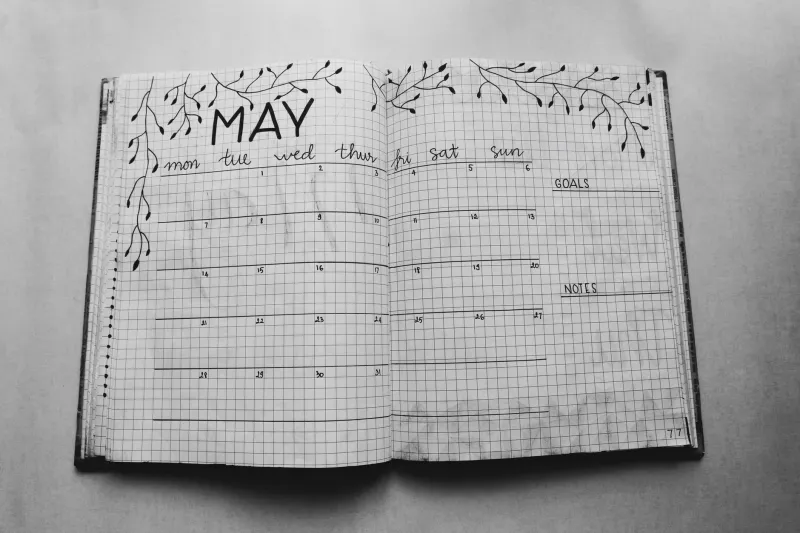
Some of these amateur naturalists went further than personal diaries. They created actual field guides — slim, hand-illustrated pamphlets and booklets — specific to their towns, counties, or watershed regions. These weren't sold in bookstores. They were distributed through local libraries, given away at nature club meetings, or passed among neighbors like useful rumors.
A few examples have survived in surprising places. The Wisconsin Historical Society holds several county-level wildflower guides produced by local garden clubs in the 1950s, complete with pressed specimen samples and seasonal observation notes. The Smithsonian's library collection includes donated nature journals from amateur naturalists in at least a dozen states. And countless more sit undigitized in courthouse basements, attic boxes, and regional historical societies that haven't had the staff to catalog them properly.
What historians of science find interesting about these documents isn't just their charm. It's their structure. The good ones used consistent taxonomy, recorded dates and locations methodically, and noted environmental conditions — exactly the kind of metadata that makes biological records scientifically useful. These weren't just nature lovers scribbling in the margins. Some of them were building genuine observational databases, just on paper.
The parallels to iNaturalist, eBird, and other modern crowdsourced platforms are hard to miss. Those apps work because thousands of ordinary people, in thousands of specific locations, contribute small but precise observations that aggregate into something larger. The neighborhood naturalists of the 20th century were running the same experiment — they just couldn't upload it.
What Got Lost in the Suburban Shuffle
The decline of these traditions is tied to a familiar story. Post-WWII suburbanization reshaped American social life in ways that quietly killed off a lot of community-embedded knowledge networks. Natural history clubs shrank or folded. Local libraries deprioritized regional collections. The rise of television, and later the internet, shifted leisure time away from outdoor observation.
There's also a credentialing problem that crept in over time. As professional biology became more specialized and technical, the contributions of amateurs were increasingly viewed with skepticism. The enthusiastic bird-watcher's county checklist didn't fit neatly into peer-reviewed scientific culture, and so it got quietly sidelined.
The result is a significant gap in long-term ecological records for many parts of the country. Scientists studying how species populations have shifted over the past century often find that their best available data ends somewhere around 1970 — right when the amateur naturalist networks were fading and before systematic digital monitoring began.
Those handwritten notebooks, in other words, contain information that doesn't exist anywhere else.
A Few Communities Keeping the Analog Tradition Alive
Not everyone abandoned the practice. In Northfield, Minnesota, a local nature journaling group has been meeting monthly since the late 1980s, maintaining a continuous record of seasonal wildlife observations in Rice County that now spans more than three decades. The group has no app, no website, and no institutional affiliation. They just keep showing up and writing things down.
In the Finger Lakes region of New York, a coalition of birding clubs has been compiling annual county bird reports in print form since the 1950s — a tradition they've maintained even as digital alternatives proliferated. The printed reports, they argue, create a physical archive that doesn't depend on a server staying online.
And in several communities, local historical societies have begun actively recruiting volunteers to digitize old nature journals and field notes before they deteriorate further. Some of these projects are connecting with university ecology departments, who are genuinely excited about the long-term observational data locked inside.
Why This Matters Right Now
There's a practical reason to care about all of this beyond historical curiosity. Ecologists studying climate-related species shifts — changes in migration timing, range expansions, population crashes — desperately need long-term baseline data. The older the record, the more valuable the comparison point.
Those dusty notebooks from the 1940s and 50s aren't just charming artifacts. They're potential climate data, sitting in cardboard boxes, waiting for someone to look.
The neighborhood naturalists who filled them weren't trying to do science in any formal sense. They were just paying close attention to the world around them and writing it down. Which, it turns out, is exactly what science needed them to do.