The Invisible Paths Through American Farmland — and Why a Few Neighbors Never Stopped Using Them
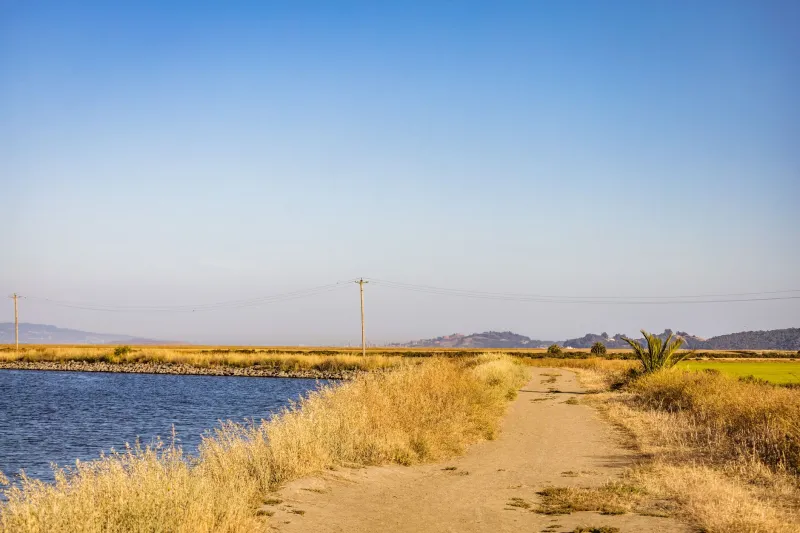
There's a worn line through the back corner of a soybean field in central Indiana that doesn't appear on any map. It isn't an easement, it isn't a trail, and it certainly isn't official. It's just a path — the kind pressed into the earth over decades by the same boots walking the same line between two neighboring properties. The farmer who owns the land knows it's there. So do the three families on the other side of his fence. Nobody has ever signed anything about it.
This is what used to be everywhere.
Before trail systems, before liability culture, before the word "trespassing" became a reflex, American rural life ran on a network of informal paths that crossed private property by mutual, unspoken agreement. They connected farms to churches, homes to swimming holes, neighborhoods to one another. They were maintained by use, respected by custom, and governed by nothing more binding than the understanding that neighbors don't make trouble for neighbors.
Most of them are gone now. But not all of them.
A Geography That Never Made It to Paper
The historian and writer Rebecca Solnit has described walking as a way of knowing the land — not just crossing it. That idea gets at something important about what these paths actually were. They weren't shortcuts in the modern sense, the kind you'd plug into a navigation app. They were geographic knowledge, passed between generations, embedded in community life.
 Photo: Rebecca Solnit, via img.rasset.ie
In 19th-century rural America, the boundaries between private properties were more porous than we tend to imagine. Fences existed, but so did gates with latches left deliberately accessible. Farmers who owned land adjacent to a school or a mill often tolerated — even welcomed — foot traffic across their property as part of the broader social fabric. Turning away a neighbor crossing your field was considered unfriendly at best, and in tight-knit communities, unfriendly had consequences.
These arrangements weren't usually formal. There was no document, no handshake on record, no easement filed at the county courthouse. They existed in the same category as knowing which family kept the good fishing spot, or which neighbor would let you shelter in their barn during a storm. Community knowledge. Inherited courtesy.
The European Comparison That Makes Americans a Little Uncomfortable
Bring up informal footpath traditions in a conversation about the outdoors, and eventually someone will mention Scotland. The Land Reform (Scotland) Act of 2003 codified what Scots call the "right to roam" — a legal guarantee that the public can access most land for recreational and educational purposes, provided they behave responsibly. England and Wales have their own version: a network of designated public rights of way that cross private land, many of them following paths that have been used for centuries.
In Scandinavia, the concept is called allemansrätten — "every man's right" — and it's considered a cornerstone of national culture. You can camp on private land, pick berries, walk through forests. The land may be privately owned, but the landscape is understood as a shared inheritance.
America has nothing equivalent, and the contrast is striking. The US has roughly 640 million acres of public land, which sounds like a lot — until you realize that the vast majority of it is concentrated in the West, and that the rural communities of the Midwest, South, and Northeast are largely surrounded by private property with few legal paths between them.
What America had instead, for a long time, was the informal system. The tolerance. The unspoken agreement.
Where the Old Agreements Still Hold
In parts of rural Vermont, New Hampshire, and Maine, a version of the old system persists, mostly around snowmobile and cross-country ski trails that cross private land by gentleman's agreement between landowners and local clubs. The clubs maintain the trails, the landowners grant access, and the whole thing runs on trust rather than legal documentation. It works — and has worked for decades — because both sides have something to gain.
In the rural South, hunting traditions have created similar informal networks. Families with long relationships to particular pieces of land maintain access through courtesy and reciprocity rather than legal right. A neighbor who lets you hunt his back forty expects that you'll return the favor in some form — help with a fence, a share of the harvest, the simple social currency of being reliable.
And in that Indiana soybean field, the worn path in the corner exists because two families have been neighbors for three generations, and crossing that field saves a half-mile walk around the road. No one has ever asked permission, because no one has ever needed to.
The Liability Wall
What changed? The short answer is liability law, and the longer answer is the cultural shift that accompanied it. As America became more litigious through the mid-20th century, landowners grew increasingly nervous about what might happen if someone crossed their property and got hurt. Insurance companies began advising clients to post no-trespassing signs. Lawyers recommended against informal access arrangements. The logic was straightforward: if you don't invite people, you can't be sued when they fall.
Most states responded by passing recreational use statutes — laws that limit a landowner's liability when they open their property for public use without charge. The idea was to encourage landowners to share access. But the laws are complicated, their protections imperfect, and many landowners simply found it easier to post signs and be done with it.
The result was a gradual closing of the informal landscape, path by path, field by field, over roughly fifty years.
A Quiet Comeback
There are signs — small ones — that the tide may be turning. Conservation organizations in New England have begun formalized programs to document and protect informal paths before they disappear entirely. Some municipalities are working with landowners to create voluntary access agreements that provide liability protection in exchange for opening land to walkers.
And in communities where the old paths never quite closed, there's a growing awareness that what they have is worth protecting. The worn line through the soybean field isn't just a shortcut. It's a relationship made visible in the landscape — proof that two families have been getting along well enough, for long enough, to leave a mark on the ground.
That's a remarkable thing to find on a map that doesn't exist.