When Highway Motels Were Tiny Villages: The Lost World of America's Tourist Cabins
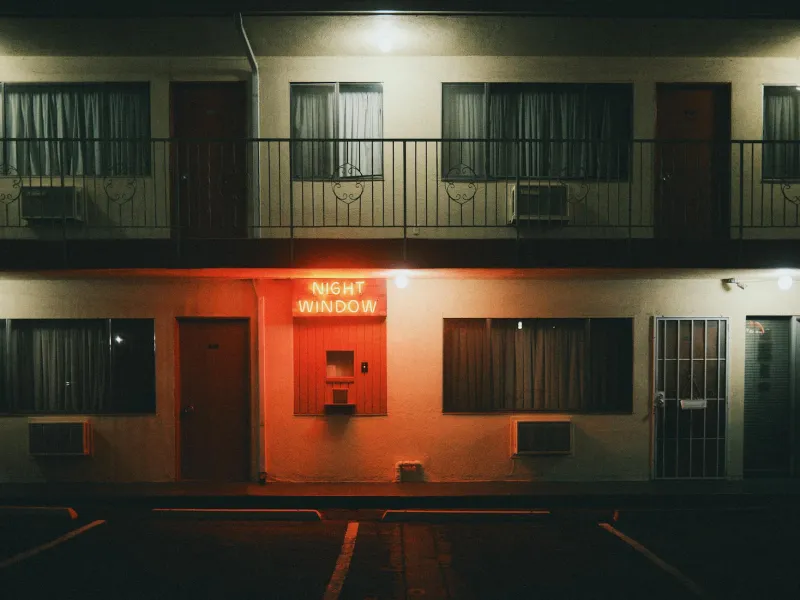
Pull off any major highway today and you'll find the same predictable lineup: Hampton Inn, Best Western, maybe a local franchise that tries to stand out with a slightly different shade of beige. But rewind to 1935, and that same stretch of road would have been lined with something far more interesting — clusters of tiny individual cabins, each with its own front porch, painted in wild colors, and run by characters who treated every guest like a neighbor dropping by for the night.
These were America's tourist courts, and for about three decades, they defined what it meant to take a road trip in this country.
The Cabin Craze That Swept America
The tourist court boom started in the 1920s when car ownership exploded and Americans suddenly had the freedom to travel wherever paved roads could take them. Unlike the grand railroad hotels of the previous era, these roadside operations were scrappy, entrepreneurial ventures — often just a farmer or small-town resident who built a few cabins in their backyard and hung out a "Tourists" sign.
By the 1930s, there were over 13,000 tourist courts scattered across America. Each one was wildly different. Some featured log cabins with stone fireplaces. Others went for Spanish colonial themes with red tile roofs. A few got downright weird — like the Wigwam Villages that dotted Route 66, where guests slept inside concrete teepees, or the various "airplane courts" where cabins were built to look like crashed planes.
The variety was the point. Tourist court owners competed not on brand recognition or standardized amenities, but on personality and local flavor.
Life in the Roadside Villages
What made tourist courts special wasn't just the quirky architecture — it was the culture they created. Unlike modern motels where you park outside your room and disappear until checkout, tourist courts were designed as miniature communities.
Most courts had a central office that doubled as a general store, selling everything from postcards to canned goods. Owners often lived on-site and knew their regular customers by name. Many courts featured communal areas — picnic tables, playgrounds for kids, sometimes even small restaurants or gas stations.
Guests would sit on their cabin porches in the evening, chatting with neighbors from other states. Kids would run between cabins making friends with other traveling families. It wasn't unusual for guests to stay several days, using the court as a base for exploring the local area.
This social aspect was intentional. Tourist court operators understood that road-weary travelers craved human connection, not just a place to sleep.
The Characters Behind the Cabins
Tourist court owners were often colorful personalities who became local legends. There was "Ma" Stafford, who ran a court outside Amarillo and was famous for her homemade pie that she'd deliver to guests' cabins. In Arizona, a former vaudeville performer named Big Jim operated a court where every cabin was themed after a different Broadway show.
Some owners were retired circus performers, others were failed farmers looking for a new start. What they shared was an entrepreneurial spirit and a knack for hospitality that couldn't be replicated by corporate training manuals.
These operators also served as informal travel guides, recommending local attractions, warning about road conditions ahead, and sometimes even organizing group excursions for their guests.
Why the Interstate Killed the Tourist Court
The beginning of the end came in the 1950s with two major changes: the rise of motel chains and the construction of the Interstate Highway System.
Chains like Holiday Inn offered something tourist courts couldn't — predictability. Travelers knew exactly what to expect at every location, from room layouts to amenities. For many Americans, this consistency became more appealing than the quirky unpredictability of independent courts.
But the real death blow was the interstate system. When new highways bypassed the old routes where tourist courts thrived, many simply withered away. Towns that had been bustling stops on major thoroughfares suddenly found themselves miles from the nearest exit ramp.
The Survivors
Today, only a handful of original tourist courts remain in operation, and visiting one feels like archaeological tourism. The Munger Moss Motel on old Route 66 in Missouri still rents individual cabins, complete with vintage neon signage. The Wigwam Motel in Holbrook, Arizona, continues to offer guests the surreal experience of sleeping in a concrete teepee.
These survivors attract a devoted following of road trip enthusiasts, vintage travel lovers, and anyone curious about what American travel used to feel like. The experience is jarring for modern travelers — no key cards, no continental breakfast, no WiFi password printed on a little card. Just a key to a cabin and an invitation to sit on the porch and watch the world go by.
What We Lost When We Gained Efficiency
The disappearance of tourist courts represents more than just a shift in lodging preferences — it marked the end of travel as a social experience. Modern road trips are efficient and predictable, but they're also isolating. We drive from point A to point B, sleep in identical rooms, and rarely interact with fellow travelers or local communities.
Tourist courts forced a slower pace of travel that encouraged serendipitous encounters and genuine connections with places and people. In our rush to make travel more convenient, we may have made it less memorable.
The next time you're tempted to book the familiar chain motel at the highway exit, consider seeking out one of the surviving tourist courts instead. It might take a little longer to find, and the amenities might be basic, but you'll get something no modern hotel can offer — a glimpse into an America where the journey was just as important as the destination.