When Americans Turned Rooftops Into Living Rooms — The Sky Parlor Craze That Disappeared With Air Conditioning
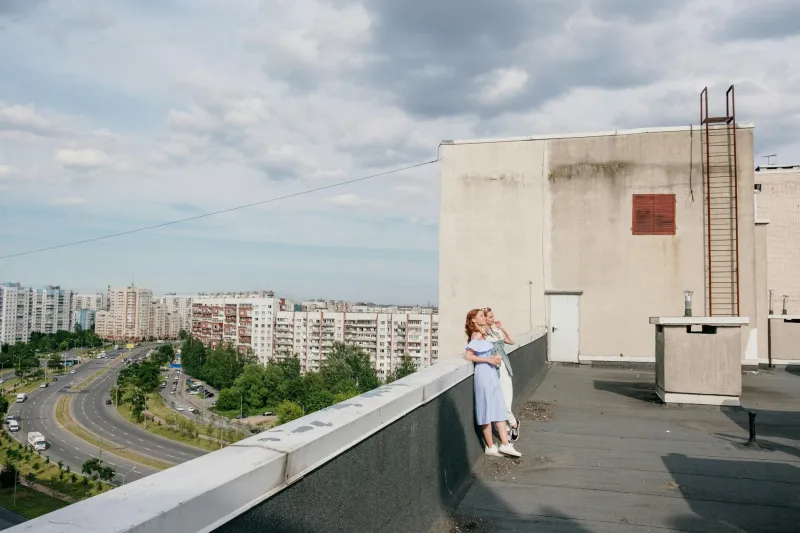
In the sweltering summer of 1895, a New York Times reporter climbed to the roof of a Manhattan tenement and discovered something remarkable: an entire neighborhood living their lives eight stories above the street. Families had dragged mattresses, rocking chairs, and dinner tables onto the tar-covered rooftops. Children played games between the chimney stacks. Adults held card parties under the stars.
"The roof has become the poor man's country estate," the reporter wrote, documenting what was then one of America's most common — and most forgotten — urban traditions.
The Rise of America's Rooftop Culture
Before air conditioning transformed American cities, rooftops weren't just emergency fire escapes or storage spaces. They were extensions of living rooms, bedrooms, and social clubs. From the 1870s through the 1920s, millions of Americans spent their summer evenings and nights on building tops, creating a culture so widespread that architects began designing specifically for it.
Hotels installed "sky parlors" — furnished rooftop lounges complete with awnings, electric lighting, and sometimes even small orchestras. Apartment buildings advertised their "sleeping decks" as premium amenities. Department stores sold specialized rooftop furniture designed to withstand weather while remaining comfortable for extended use.
The practice wasn't limited to tenements or working-class neighborhoods. Wealthy families in cities like Chicago, Philadelphia, and Boston held formal dinner parties on their rooftops, complete with white tablecloths and multiple courses served by staff who climbed several flights of stairs carrying silver serving dishes.
The Social Rules of Sky Living
What's fascinating about rooftop culture is how quickly it developed its own elaborate social customs. Families established "territories" on shared rooftops, marked by the placement of their furniture and maintained through unspoken agreements. Children were expected to respect these boundaries, while adults developed complex etiquette around privacy, noise levels, and shared space usage.
Some buildings appointed "roof wardens" — residents responsible for mediating disputes and organizing group activities. Popular rooftop games included modified versions of parlor entertainments adapted for outdoor spaces and limited lighting. Courting couples found rooftops offered supervised but semi-private spaces for evening conversations.
Newspapers regularly published "rooftop society" columns, documenting the marriages, business deals, and community decisions that happened under the open sky. The practice became so integral to urban life that real estate advertisements routinely mentioned rooftop access as a selling point.
Why the Sky Parlors Vanished
The decline of rooftop living happened with surprising speed. The widespread adoption of electric fans in the 1920s, followed by air conditioning in the 1930s and 1940s, gave Americans alternatives to seeking relief above their apartments. But the cultural shift ran deeper than just comfort technology.
Urban planning began prioritizing automobile access over pedestrian community spaces. Building codes increasingly restricted rooftop access for safety reasons. Perhaps most significantly, the rise of suburban living offered Americans private outdoor spaces — backyards — that didn't require sharing with neighbors or climbing multiple flights of stairs.
By 1950, most American cities had effectively abandoned their rooftop cultures. The sky parlors were converted to storage spaces or simply locked away behind heavy doors marked "authorized personnel only."
The Quiet Rooftop Revival
Today, a handful of American cities and businesses are rediscovering what their predecessors knew about rooftop living — though with distinctly modern twists. Brooklyn's Industry City has converted several building tops into community gardens and co-working spaces that operate into the evening hours. Portland's McMenamins hotels have restored historic rooftop lounges, complete with period furniture and vintage lighting.
In Chicago, some apartment complexes are installing "community sky decks" that echo the old sky parlor concept, providing furnished outdoor spaces for residents to gather during summer months. These aren't just trendy rooftop bars — they're designed for everyday use, with comfortable seating, weather protection, and policies that encourage regular community interaction.
Urban planners in cities like Seattle and Austin are studying how rooftop spaces might address modern challenges like housing density, community connection, and urban heat islands. Some are discovering that the old sky parlor model — shared, regularly used outdoor spaces — might offer solutions to contemporary urban isolation.
What We Lost and What We're Finding Again
The disappearance of rooftop culture represented more than just a change in cooling technology. Americans lost a form of urban community that required negotiation, sharing, and regular interaction with neighbors. The sky parlors created what sociologists now call "weak ties" — casual but meaningful connections that build social resilience.
Modern rooftop revivals suggest that Americans are hungry for this kind of community space again, even if we're approaching it differently than our great-grandparents did. The challenge is creating rooftop cultures that feel organic rather than engineered — spaces that become genuine extensions of urban life rather than occasional novelties.
The next time you're in an older American city, look up at the building tops around you. Many still have the architectural remnants of sky parlors — weathered awning brackets, unusual railings, or small structures that once housed rooftop furniture. They're reminders of when Americans routinely lived their evening lives under the open sky, creating communities eight stories above the street.