Victorian Tourists Figured Out Something About Travel That We're Only Now Rediscovering
The Travelers Who Refused to Rush
Somewhere in the mid-1800s, a prosperous New York merchant packed his trunks, boarded a train, and headed to Saratoga Springs — where he planned to stay for six weeks.
Not six days. Six weeks.
He wasn't unusual. For a certain class of 19th-century American, this was simply how you traveled. You picked a place, you went deep, and you stayed long enough to actually become part of the rhythm of it. The idea of hopping between four cities in a week would have struck most Victorian-era travelers as not just exhausting but slightly absurd — like eating a meal so fast you couldn't taste it.
We've spent the better part of a century building the infrastructure to make rapid, multi-destination travel possible. And now, quietly, a growing number of people are abandoning that model and doing something that looks a lot like what those 19th-century travelers were up to.
What 'Slow Travel' Actually Looked Like
The practice had a structure to it, even if nobody called it slow travel at the time. Wealthy families from Boston, New York, Philadelphia, and Baltimore would establish a seasonal rhythm: summers at a resort town — Saratoga, Newport, Bar Harbor, Cape May — and sometimes extended winter stays in warmer climates like Charleston or, for the more adventurous, abroad.
These weren't vacations in the modern sense. They were relocations with a return ticket. Families would rent entire floors of resort hotels or take furnished houses for the season. Children came along. Social calendars developed. You'd see the same people every year, build relationships with local shopkeepers, develop favorite walks and favorite tables at favorite restaurants.
The travel itself was part of the point, but so was the staying. The idea was that you couldn't really know a place in a weekend. You needed long enough for the novelty to wear off and the actual texture of a place to come through.
The Infrastructure That Made It Possible — and Then Disappeared
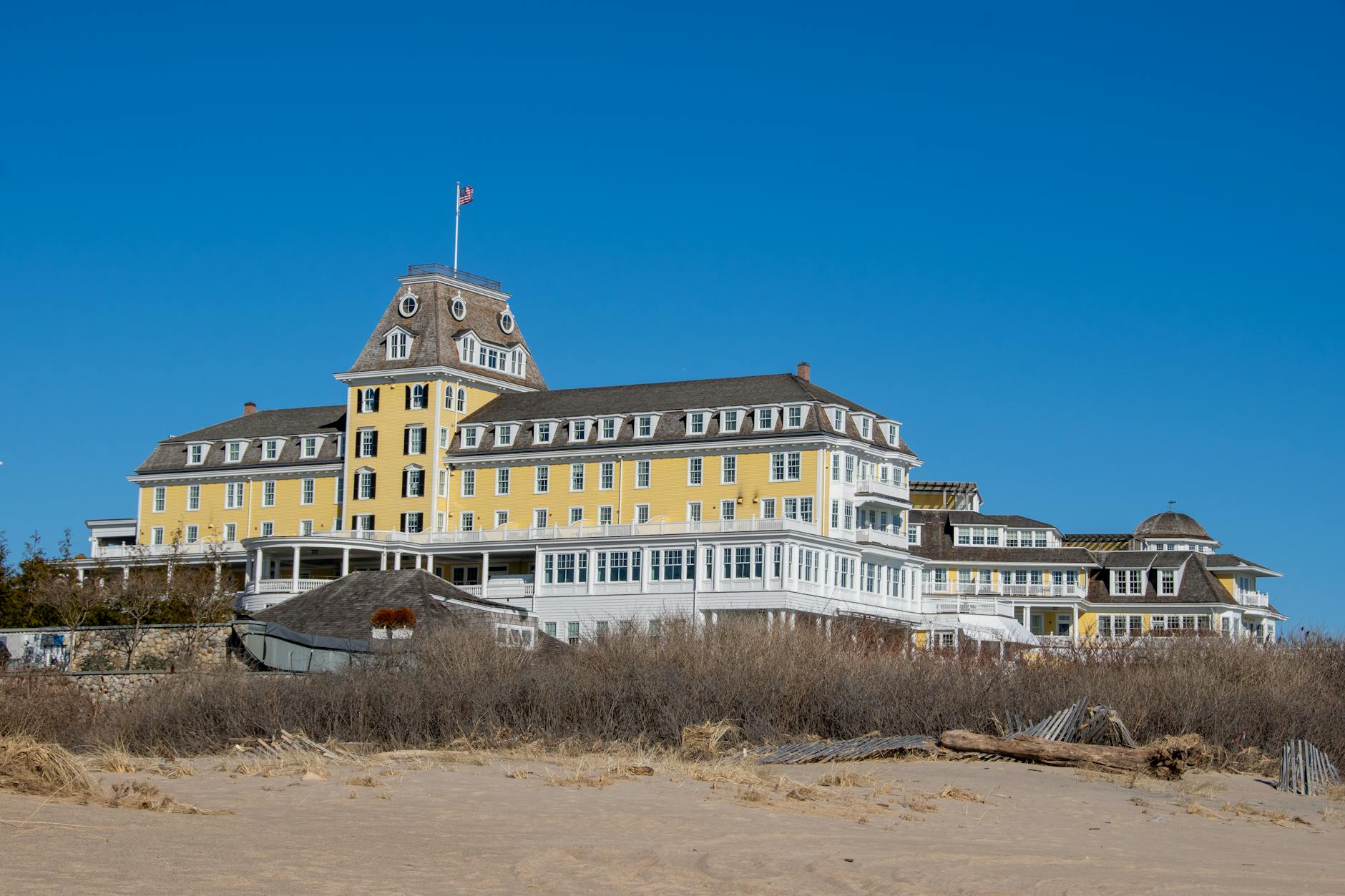
American resort culture in the 19th century was built entirely around this model. The grand hotels of that era — the United States Hotel in Saratoga, the Mount Washington Hotel in New Hampshire, the Greenbrier in West Virginia — weren't designed for quick turnovers. Their room rates were structured around weekly and monthly stays. Their amenities (mineral baths, promenades, croquet lawns, evening concerts) were designed for people who had already seen the main attraction and needed something to do on Tuesday afternoon.
The railroad made it accessible to the emerging middle class, and for a few decades, extended leisure travel was genuinely mainstream among Americans who could afford it.
Then the 20th century happened. Commercial aviation compressed distance. The two-week vacation became the cultural standard. Hotels optimized for short stays. Travel marketing shifted toward destinations — the more, the better — rather than depth. The idea of spending a month somewhere started to feel like something only retirees did.
The Accidental Rediscovery
Here's where the story gets interesting. In 2020, remote work dismantled the logic that had kept people tethered to short vacations. If you're not in the office, there's no hard return date. If your laptop works in Asheville, it works in Asheville for three weeks just as well as for three days.
The "workation" trend that emerged from that period was framed as a new idea — a product of pandemic-era flexibility and the rise of Zoom. And in some ways it was. But the underlying behavior? Picking a place you actually want to spend time in, settling into a rhythm, getting to know the local coffee shop by name, feeling like a temporary resident rather than a tourist passing through? That's a very old impulse getting a second chance.
Platforms like Airbnb saw it in their booking data almost immediately. Monthly stays — once a niche category — became one of the fastest-growing segments on the platform. Cities that had built their tourism economies around weekend visitors started seeing guests who booked for three or four weeks at a stretch. Some destinations, particularly smaller towns and rural areas, found that longer-stay visitors spent more money locally and put less strain on infrastructure than high-turnover weekend crowds.
The economics, it turns out, work out better for everyone when people actually stay.
What You Actually Gain From Staying Longer
There's a specific kind of knowledge you only get from being somewhere long enough. You learn which grocery store is worth the extra drive. You find the restaurant that doesn't have a Yelp page but is always full of locals at 7pm. You figure out the neighborhood rhythms — which streets are quiet on weekday mornings, where people actually walk their dogs, what the place smells like when it rains.
None of that shows up in a travel guide. It's the knowledge that Victorian tourists were specifically trying to accumulate, even if they wouldn't have described it that way.
There's also a cognitive shift that happens around day four or five of being somewhere. The tourist brain — constantly cataloging, photographing, optimizing — starts to quiet down. You stop treating every meal as an experience to evaluate and start just eating. That shift is what makes travel feel genuinely restorative rather than just stimulating.
How to Try It Without Quitting Your Job
You don't need six weeks or a trust fund. The modern version of slow travel scales down pretty gracefully.
A long weekend extended by a day or two in a single place — rather than split between two cities — already starts to shift the experience. Booking an apartment or house rental instead of a hotel changes your relationship to a place almost immediately; you're cooking in someone's kitchen, not ordering room service.
If you have any remote flexibility, even one or two days of working from a destination can justify a longer stay that would otherwise feel impractical. And destinations that cater to longer stays — think smaller cities with strong walkable neighborhoods, college towns, coastal communities with off-season rates — often offer weekly pricing that makes the math work better than you'd expect.
The Victorian travelers who pioneered this approach weren't onto something revolutionary. They were just paying attention to how humans actually experience places. We built a century of infrastructure that made it easy to ignore that. Now, slowly, we're finding our way back.