America's Longest Highway Is Also Its Most Overlooked Road Trip
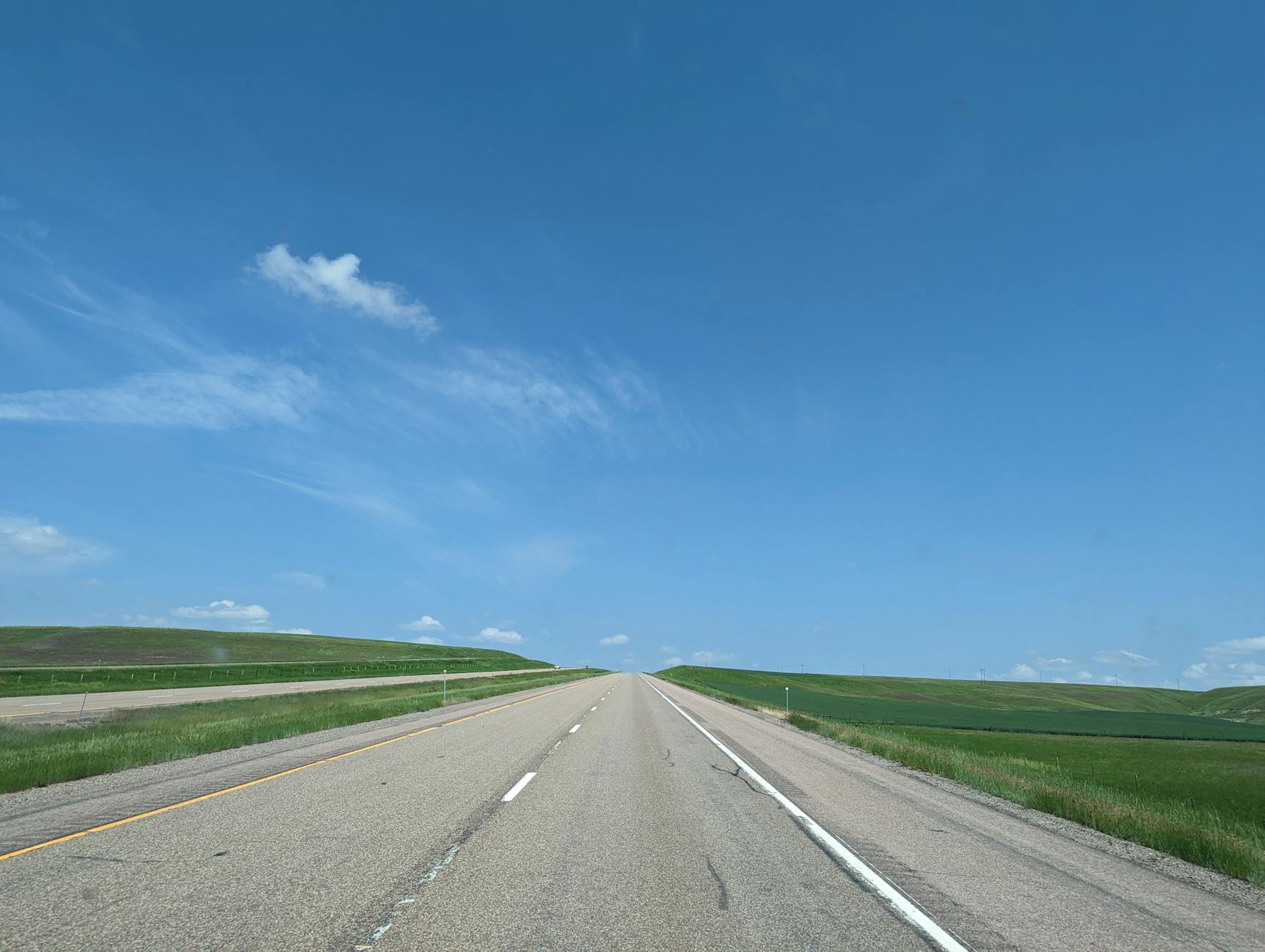
America's Longest Highway Is Also Its Most Overlooked Road Trip
Everybody knows Route 66. The diners, the motels with the neon signs, the Cadillac Ranch photo op — it's been marketed so thoroughly that driving it sometimes feels less like a road trip and more like visiting a theme park version of a road trip. Which is fine. But if you're the kind of person who'd rather stumble onto something genuinely weird than stand in line for a selfie spot, there's another highway worth knowing about.
US Route 20 is the longest road in America. It runs 3,365 miles from Boston, Massachusetts, all the way to Newport, Oregon — crossing twelve states, two time zones, and what feels like several different versions of the country. And while the highway's endpoints get occasional attention, a long central stretch of it, cutting through Nebraska, Wyoming, and into southern Idaho, is about as close to a forgotten road as you can find in the continental United States.
This is the part of Route 20 that doesn't show up on "best road trips" listicles. The part that doesn't have a gift shop selling commemorative mugs. The part where the gas stations are forty miles apart and the roadside attractions are genuinely strange rather than deliberately quirky. Here are four stops that make it worth the detour.
Ainsworth, Nebraska: The Town That Forgot to Disappear
A lot of small Nebraska towns have been quietly dying for decades — population bleeding out as agriculture mechanized and young people left for Omaha or Lincoln. Ainsworth, sitting on Route 20 in the Sand Hills, somehow didn't get the memo. It's not thriving exactly, but it's stubbornly, inexplicably intact: a functioning main street, a local newspaper that's been printing continuously since the 1880s, and a surrounding landscape of rolling grass-covered dunes that looks like nothing else in the Midwest.
The Sand Hills themselves are the discovery here. They're the largest sand dune formation in the Western Hemisphere — an area roughly the size of the state of Maine, covered in grass so thick that the dunes beneath it are almost completely stable. Most Americans have never heard of them. Drive through on a clear morning and the light does something unusual to the hills, making the landscape feel both vast and oddly intimate. There are no crowds. There are almost no other cars. It's the kind of place that makes you pull over just to stand quietly for a minute.
Valentine, Nebraska: A Name That Oversells It (In the Best Way)
About sixty miles west of Ainsworth, Valentine sits on the edge of the Niobrara River valley and serves as the unofficial gateway to one of the most underappreciated stretches of river in the country. The Niobrara has been federally designated a National Scenic River, which sounds like bureaucratic praise but in this case is genuinely accurate — it cuts through a canyon where prairie, forest, and Great Plains ecosystems overlap in a way that ecologists find fascinating and regular visitors find quietly stunning.
The town itself has leaned hard into its name for Valentine's Day marketing, which is amusing and harmless. But the real draw is the river, the canyon, and the fact that you can float a section of it on a rented tube for about twenty dollars and spend an afternoon watching waterfalls drop into the water from limestone ledges. In July, the water temperature is perfect. The crowds are nothing compared to any comparable experience in Colorado.
Lusk, Wyoming: Ghost Town Energy With the Lights Still On
By the time Route 20 reaches Lusk, Wyoming, the landscape has shifted from Sand Hills grassland to high plains scrub — wide, flat, and windswept in a way that feels almost confrontational. Lusk is a small ranching town with a population that's hovered around 1,500 for most of the past century, and it has the particular atmosphere of a place that experienced one good boom (cattle, then oil) and then settled into a long, quiet afterward.
What makes it worth stopping: the Stagecoach Museum, which is genuinely excellent in a way that small-town museums almost never are, with artifacts and oral histories documenting the Cheyenne-Deadwood Stage Line that ran through this exact ground in the 1870s and '80s. There's also a local legend involving a woman named Rawhide, a vigilante killing, and a disputed burial site that the town has been arguing about for over a hundred years. The details are murky and contested in the best possible way. Ask anyone at the diner on main street — they'll have opinions.
Craters of the Moon, Idaho: The Stop That Justifies the Whole Drive
If you stay on Route 20 as it crosses into southern Idaho, you'll eventually reach Craters of the Moon National Monument — and this is where the road trip earns its keep. The monument covers nearly 750,000 acres of lava fields, cinder cones, and lava tube caves that look, with complete sincerity, like the surface of another planet. NASA has actually used the site for astronaut geological training, which tells you something.
Most visitors to Idaho are heading to Sun Valley or the Sawtooth Mountains. Craters of the Moon sits just off the main tourist path, which means the parking lot is manageable, the trails are uncrowded, and you can actually stand alone in a lava field the size of a small state and feel the full, slightly unsettling scale of it. Bring water. Wear closed-toe shoes. Go in the morning before the black lava starts radiating heat.
The Case for the Road Nobody's Driving
Route 66 deserves its reputation. But there's a particular pleasure in a road that hasn't been curated for you — where the stops are discoveries rather than destinations, and where the landscape between the towns is as interesting as the towns themselves. Route 20 through the middle of the country is that road. It's long, it's quiet, and it's full of things worth finding.
You just have to be willing to go looking.