When Roads Were Built for Wonder
Driving in America today means getting from Point A to Point B as efficiently as possible. But for a brief, shining moment in the early 20th century, this country built roads designed for an entirely different purpose: pure enjoyment.
These weren't highways or commuter routes. They were "parkways" and "scenic drives" engineered specifically for Sunday afternoon pleasure cruises, with sweeping curves that followed natural contours, carefully curated views, and strict rules that banned commercial traffic entirely.
Most Americans have never heard of this lost network of leisure roads, partly because the Interstate Highway System systematically erased or bypassed them starting in the 1950s. But scattered survivors still exist across the Eastern Seaboard and Midwest — hidden gems that offer a completely different way of experiencing American landscapes.
The Philosophy of Slow Travel
The parkway movement began in the 1920s, when automobile ownership was exploding but the infrastructure to support it barely existed. Urban planners and landscape architects saw an opportunity to create something unprecedented: roads that were destinations in themselves.
The Bronx River Parkway, completed in 1925, established the template. Instead of cutting straight lines through the landscape, engineers followed the meandering path of the river, creating a driving experience that felt more like gliding through a carefully composed painting.
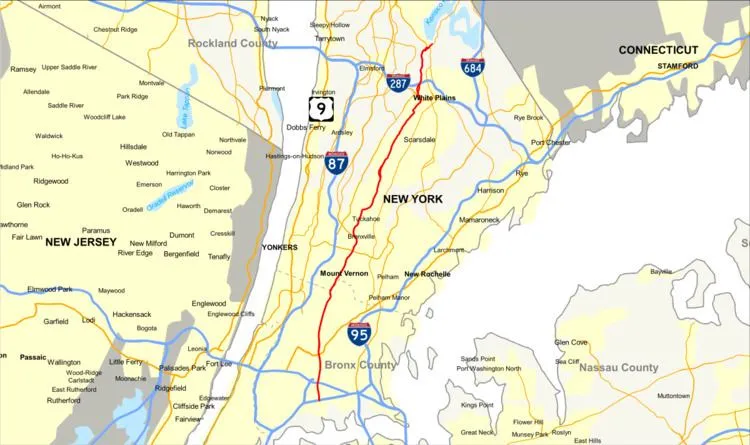 Photo: Bronx River Parkway, via alchetron.com
Commercial trucks were banned. Billboards were forbidden. Even the overpasses were designed as architectural elements, crafted from local stone to blend seamlessly with surrounding terrain.
The goal wasn't efficiency — it was transformation. These roads were meant to provide urban dwellers with a temporary escape into carefully choreographed natural beauty.
The Golden Age of Scenic Infrastructure
By the 1940s, nearly every state east of the Mississippi had embraced the parkway concept. The Blue Ridge Parkway snaked 469 miles through Virginia and North Carolina's mountains. The Natchez Trace Parkway followed ancient Native American trails through Mississippi, Alabama, and Tennessee.
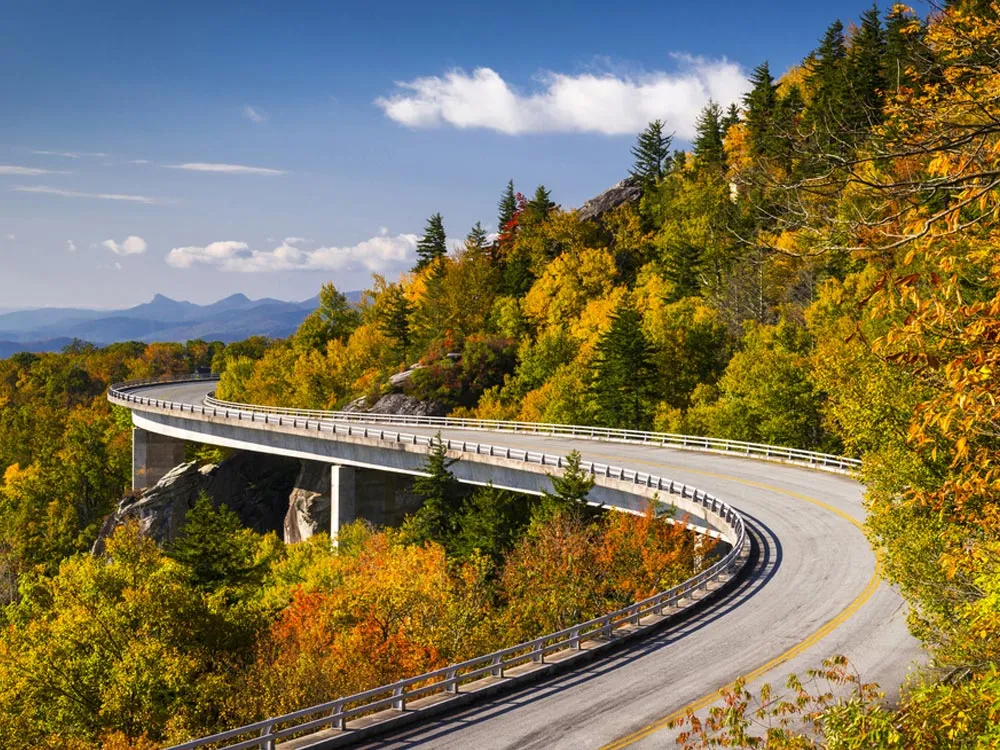 Photo: Blue Ridge Parkway, via images.mapsofworld.com
New York led the movement with an ambitious network connecting New York City to upstate recreational areas. The Taconic State Parkway, Saw Mill River Parkway, and Hutchinson River Parkway created a web of scenic routes that turned weekend drives into mini-vacations.
These weren't just roads — they were carefully orchestrated experiences. Landscape architects planted native wildflowers along the shoulders, timed to bloom in sequence throughout the driving season. Stone bridges were positioned to frame specific mountain vistas. Rest areas featured locally sourced materials and regional architectural styles.
Why the Dream Died
The Interstate Highway System changed everything. When President Eisenhower signed the Federal-Aid Highway Act in 1956, it prioritized speed, freight capacity, and national defense over scenic beauty.
The new interstates could move traffic faster and handle massive trucks that parkways were never designed to accommodate. More importantly, federal funding heavily favored interstate construction over maintaining existing scenic routes.
Many original parkways were "upgraded" to interstate standards, which meant straightening curves, widening lanes, and removing the very features that made them special. Others were simply bypassed and allowed to deteriorate as traffic shifted to faster alternatives.
The cultural shift was equally dramatic. Americans increasingly viewed driving as a necessary evil rather than a leisure activity. Why take the scenic route when the interstate could get you there in half the time?
Survivors Hiding in Plain Sight
Despite decades of neglect and "improvement," remarkable stretches of original parkway philosophy still exist for travelers who know where to find them.
The Merritt Parkway in Connecticut remains largely unchanged since the 1930s, with its distinctive Art Deco bridges and prohibition on commercial vehicles. Driving its 37 miles feels like time travel.
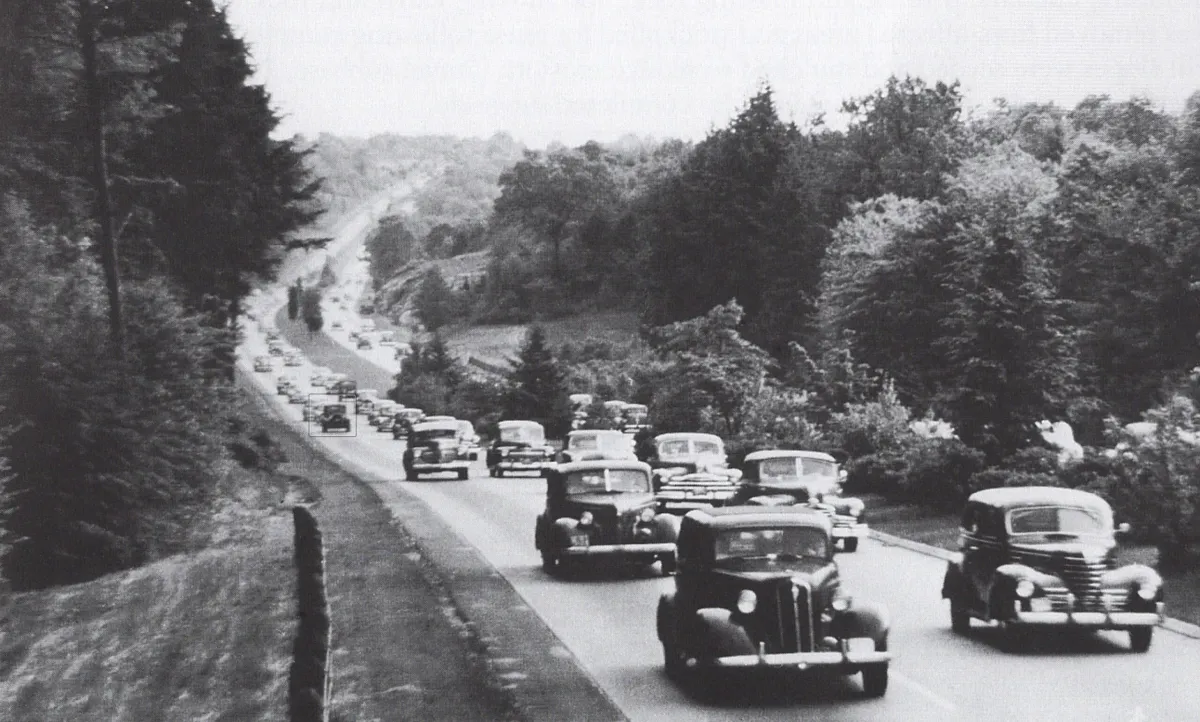 Photo: Merritt Parkway, via ctre.co
Skyline Drive through Virginia's Shenandoah National Park preserves the original vision of roads as scenic experiences, complete with overlooks positioned for maximum visual impact.
The George Washington Memorial Parkway along the Potomac River near Washington, D.C., still offers the kind of curated natural beauty that early parkway designers envisioned.
Portions of the original Route 9W along the Hudson River in New York showcase how scenic highways once prioritized views over speed.
Rediscovering the Art of the Sunday Drive
Driving these surviving parkways today feels revolutionary precisely because it's so different from normal American road travel. The curves force you to slow down. The absence of trucks creates an almost meditative quiet. The carefully preserved views remind you that landscapes can be experienced as art.
These roads work best when approached with the original spirit they were designed for: unhurried exploration rather than efficient transportation. Plan for frequent stops at overlooks. Allow extra time to appreciate architectural details on bridges and rest areas. Bring a picnic and use the scenic turnouts as they were intended.
The Modern Revival
Interestingly, the concept of roads-as-experience is quietly making a comeback. The National Scenic Byways Program, established in 1991, has designated over 150 routes that prioritize scenic beauty over efficiency. States like Vermont and Montana have embraced "scenic highway" designations that echo the original parkway philosophy.
Even some new road construction incorporates parkway principles. The recently completed sections of the Blue Ridge Parkway in North Carolina feature the same attention to landscape integration and visual experience that characterized the original movement.
Planning Your Own Parkway Adventure
The best surviving parkways share certain characteristics: they follow natural features like rivers or ridge lines, maintain their original prohibition on commercial traffic, and preserve the landscape architecture elements that made them special.
Start with the most accessible options near major cities — the Merritt Parkway from New York, the George Washington Memorial Parkway near D.C., or the Storm King Highway north of New York City. These offer quick tastes of what American road travel once prioritized.
For longer adventures, the Blue Ridge Parkway and Natchez Trace Parkway provide multi-day experiences of roads designed purely for pleasure rather than efficiency.
The key is adjusting your expectations. These aren't fast roads. They're not always the most direct routes. But they offer something increasingly rare in American travel: the simple pleasure of moving through beautiful landscapes at a pace that allows you to actually see them.