The Forgotten American Art of Sleeping in Stages — and Why Doctors Are Starting to Recommend It Again
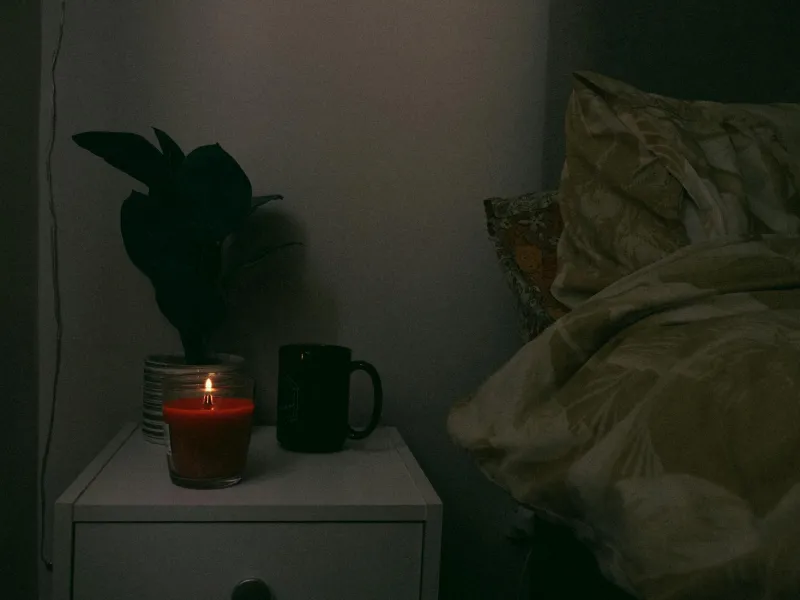
The Forgotten American Art of Sleeping in Stages — and Why Doctors Are Starting to Recommend It Again
If you've ever found yourself wide awake at 2 AM, staring at the ceiling and wondering what's wrong with you, here's something that might surprise you: until about 150 years ago, waking up in the middle of the night wasn't considered a problem at all. It was just Tuesday.
For most of human history, Americans — and people everywhere — naturally slept in two distinct chunks, separated by a quiet period of wakefulness that lasted anywhere from 30 minutes to two hours. They called it "first sleep" and "second sleep," and the time in between? That was for thinking, praying, talking with your spouse, or simply lying peacefully in the dark.
When Night Was Really Night
Before Thomas Edison's light bulbs started illuminating American homes in the 1880s, darkness meant darkness. No streetlights. No glowing screens. No late-night convenience stores. When the sun went down, most people went to bed within a couple of hours — not because they were tired, but because there wasn't much else to do.
Historical records from colonial America through the mid-1800s are filled with casual references to this two-part sleep pattern. Court documents mention crimes committed "after first sleep." Personal letters describe conversations held "in the watching time." Medical texts recommended certain treatments be taken "between sleeps."
Roger Ekirch, a historian at Virginia Tech, spent years digging through these old documents and found hundreds of references to segmented sleep. It wasn't an oddity or a medical condition — it was just how people slept.
The Industrial Revolution Changed Everything
The shift away from segmented sleep happened gradually, then all at once. Gas lighting in the 1820s and 1830s started extending evening activities. Then came electric lighting, factory schedules, and the pressure to maximize daylight productivity.
Suddenly, staying up later became possible, even fashionable. The wealthy could afford to light their homes and socialize well into the evening. Workers needed to sync their schedules with industrial demands. And gradually, the idea took hold that "normal" sleep meant going to bed late and sleeping straight through until morning.
By the early 1900s, segmented sleep had largely disappeared from American life, relegated to the category of quaint historical curiosity. Sleep became something you were supposed to do efficiently, in one solid block, preferably eight hours.
What Modern Science Is Discovering
Here's where it gets interesting: sleep researchers are now finding that our ancestors might have been onto something.
In the 1990s, psychiatrist Thomas Wehr conducted an experiment at the National Institute of Mental Health. He had volunteers live for a month in conditions that mimicked pre-industrial darkness — 14 hours of darkness each night, no artificial light. Within a few weeks, nearly all of them naturally fell into the old segmented sleep pattern.
They'd sleep for about four hours, wake up for one to three hours in a state Wehr described as "quiet wakefulness," then sleep for another four hours. During that middle period, they reported feeling incredibly peaceful and meditative — not groggy or frustrated like we typically feel during middle-of-the-night wake-ups.
Why Your 3 AM Wake-Up Might Not Be Insomnia
This research suggests that what we often diagnose as "sleep maintenance insomnia" — the inability to stay asleep through the night — might sometimes just be our natural sleep pattern trying to emerge.
Dr. Russell Foster, a circadian neuroscientist at Oxford, points out that our modern sleep schedules often fight against our biology. "We've created this myth that we must have eight hours of continuous sleep," he says, "but there's no biological imperative for that."
Some sleep specialists are now experimenting with helping patients work with segmented sleep rather than against it. Instead of lying in bed anxiously trying to fall back asleep, they encourage people to embrace that middle period — to read, meditate, or simply rest quietly.
How to Try Segmented Sleep Today
If you're curious about experimenting with your great-great-grandmother's sleep schedule, sleep researchers suggest starting small. Try going to bed earlier — around 9 or 10 PM. If you wake up naturally after three to five hours, instead of fighting it, get up and do something quiet and low-stimulation for 30 to 60 minutes. Read by dim light, write in a journal, or practice gentle stretches.
The key is keeping artificial light to a minimum and avoiding screens entirely. The goal isn't to be productive during this time, but to rest in a different way.
The Quiet Revolution
Whether segmented sleep will make a widespread comeback in our 24/7 world remains to be seen. But for the growing number of Americans struggling with conventional sleep advice, it offers something valuable: permission to stop fighting their natural rhythms and instead work with them.
After all, if it was good enough for George Washington, Abraham Lincoln, and millions of Americans before the light bulb changed everything, maybe it's worth considering that our ancestors knew something about rest that we've simply forgotten in our rush toward efficiency.
Sometimes the most radical thing you can do is go back to basics — even if those basics happen to involve waking up at 2 AM and being perfectly okay with it.