The California Mining Town That Became a Theme Park Version of Itself
The California Mining Town That Became a Theme Park Version of Itself
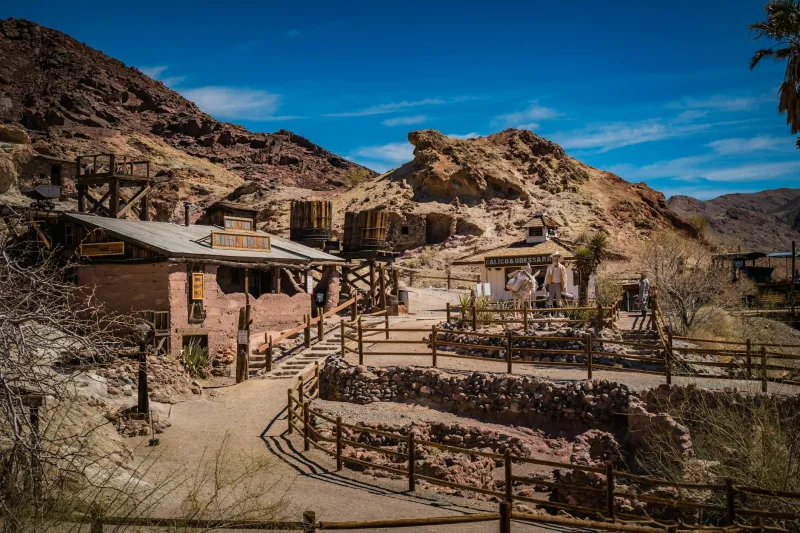
Deep in the Mojave Desert, about halfway between Las Vegas and Los Angeles, sits one of America's most peculiar tourist destinations. Calico isn't just any ghost town — it's a ghost town that was literally purchased, rebuilt, and turned into a sanitized version of its former self.
The story begins in the 1950s when Walter Knott, founder of Knott's Berry Farm, drove through the crumbling remains of what was once California's largest silver mining town. Instead of letting history fade into the desert, Knott made an unusual decision: he bought the entire town and set about restoring it as a tourist attraction.
When Silver Built a Boomtown
Calico's original story reads like a classic Western tale. Founded in 1881 after silver was discovered in the nearby mountains, the town exploded from nothing to over 3,000 residents in just a few years. At its peak, Calico boasted 500 mines, dozens of saloons, a red-light district, and all the chaos that came with sudden wealth in the Wild West.
But silver prices crashed in the 1890s, and by 1907, Calico was essentially abandoned. For nearly half a century, the desert slowly reclaimed the buildings, leaving behind the kind of authentic ruins that ghost town enthusiasts dream about finding.
The Knott's Berry Farm Connection
Walter Knott wasn't just any businessman — he was already in the business of manufacturing nostalgia. His theme park in Buena Park had made him wealthy by creating an idealized version of the Old West, complete with staged shootouts and period costumes. When he saw Calico's potential, he envisioned something different: a real ghost town that could be experienced safely by families.
Starting in 1951, Knott invested heavily in restoration. But here's where things get interesting — he didn't just preserve what remained. He rebuilt structures that had long since collapsed, added amenities that never existed in the original town, and created what he called "the West's most famous ghost town."
The Authenticity Paradox
Today's Calico presents visitors with a fascinating contradiction. Walk down the main street and you'll see buildings that are genuinely old, sitting next to reconstructions that look convincingly weathered. The town's general store sells both legitimate historical artifacts and mass-produced souvenirs designed to look vintage.
The result is a place that feels simultaneously real and fake. Some of the mines you can tour actually produced silver. Some of the buildings housed real miners and their families. But the neat wooden sidewalks, the carefully maintained facades, and the absence of any genuine decay create an experience that's more Disneyland than authentic ghost town.
What Makes Calico Worth Visiting
Despite — or perhaps because of — its manufactured authenticity, Calico offers something unique in the American Southwest. Unlike the dozens of genuinely abandoned towns scattered across the desert, Calico is accessible. You can walk through a silver mine, eat at a saloon, and sleep in a cabin without worrying about rattlesnakes, unstable structures, or getting lost in the middle of nowhere.
The town also preserves stories that might otherwise be lost. The Maggie Mine tour takes visitors deep underground to see where miners actually worked. The schoolhouse contains artifacts from families who really lived here during the boom years. These elements of genuine history shine through the tourist-friendly veneer.
The Modern Ghost Town Experience
Calico operates as a San Bernardino County Regional Park, which adds another layer to its complex identity. It's simultaneously a historical site, a theme park, and a camping destination. On weekends, you might encounter staged gunfights and period reenactors. During the week, it's often nearly empty, creating an oddly authentic ghost town atmosphere despite all the manufactured elements.
The camping area lets visitors spend the night in the desert, surrounded by mountains and silence that haven't changed since the mining days. It's here, after the day-trippers leave, that Calico feels most genuine — a place where the desert's vastness puts human ambitions in perspective, just as it did when the silver ran out over a century ago.
Performance vs. Preservation
Calico raises uncomfortable questions about how we relate to history. Is it better to let authentic ruins crumble naturally, or to preserve them through reconstruction and interpretation? Does adding gift shops and guided tours diminish a place's historical significance, or make it accessible to people who would never otherwise experience it?
The answer might be that Calico succeeds precisely because it doesn't try to hide what it is. Unlike some historical sites that present sanitized versions of the past while claiming complete authenticity, Calico embraces its role as both museum and entertainment venue.
Why It Matters Today
In an era when we can virtually visit any place on Earth through our phones, Calico offers something different: the chance to physically walk through a landscape where dramatic human stories played out. Yes, it's been polished and packaged for tourists. But underneath the gift shop and the staged shootouts, the desert and mountains remain unchanged from when prospectors first glimpsed silver in the rocks.
Calico reminds us that preservation and performance don't have to be opposites. Sometimes the best way to keep a story alive is to let people live it, even if that means accepting a little artificiality along the way. In the end, this strange hybrid of ghost town and theme park might be the most honest way to present the American West — a place where reality and mythology have always been thoroughly mixed.