Millions of Acres of Free Camping in the American West — and Almost Nobody Talks About It
Millions of Acres of Free Camping in the American West — and Almost Nobody Talks About It
Every summer, millions of Americans compete for a shrinking number of campsite reservations at national parks — refreshing booking pages at exactly the right moment, joining waitlists, sometimes planning trips a full year in advance just to secure a patch of ground with a fire ring and a picnic table.
Meanwhile, an area roughly the size of Alaska sits largely empty and legally open to anyone who wants to sleep on it. For free. Tonight, if you want.
It's called Bureau of Land Management land, and it might be the best-kept secret in American outdoor travel.
What BLM Land Actually Is
The Bureau of Land Management administers approximately 245 million acres of public land across the United States, concentrated heavily in the western states — Nevada, Utah, Colorado, Wyoming, Montana, Idaho, Oregon, Arizona, New Mexico, and California all contain enormous BLM holdings. That's nearly one-eighth of the entire country's land area, managed by a federal agency that most Americans couldn't name.
Unlike national parks, which have entrance fees, designated campsites, and heavily managed visitor experiences, most BLM land allows what's called dispersed camping: you drive out onto public land, find a spot you like, and set up camp. No reservation system. No nightly fee. No ranger station checking your permit. The main rules are practical rather than bureaucratic — stay at least 200 feet from water sources, pack out everything you bring in, and don't stay in one spot for more than 14 consecutive days.
That's largely it. The legal framework is genuinely that open.
Why Most People Have Never Heard of This
The gap between how much BLM land exists and how widely known dispersed camping is has always been a little puzzling. Part of it is marketing — the National Park Service has a brand identity that BLM simply doesn't. Part of it is that dispersed camping requires a bit more self-sufficiency than showing up to a developed campground: you need to navigate to dispersed areas using maps or apps, you won't find flush toilets or water hookups, and cell service is often nonexistent.
But a significant part of it is that the people who use BLM land regularly tend not to advertise it. There's a quiet, self-preserving culture around these places — share too loudly, and the spots that have stayed beautiful precisely because they're not overrun stop being that.
This article isn't going to publish GPS coordinates to any specific location. But it can tell you how to find them yourself, which is more useful anyway.
Some Places Worth Knowing About (in General Terms)
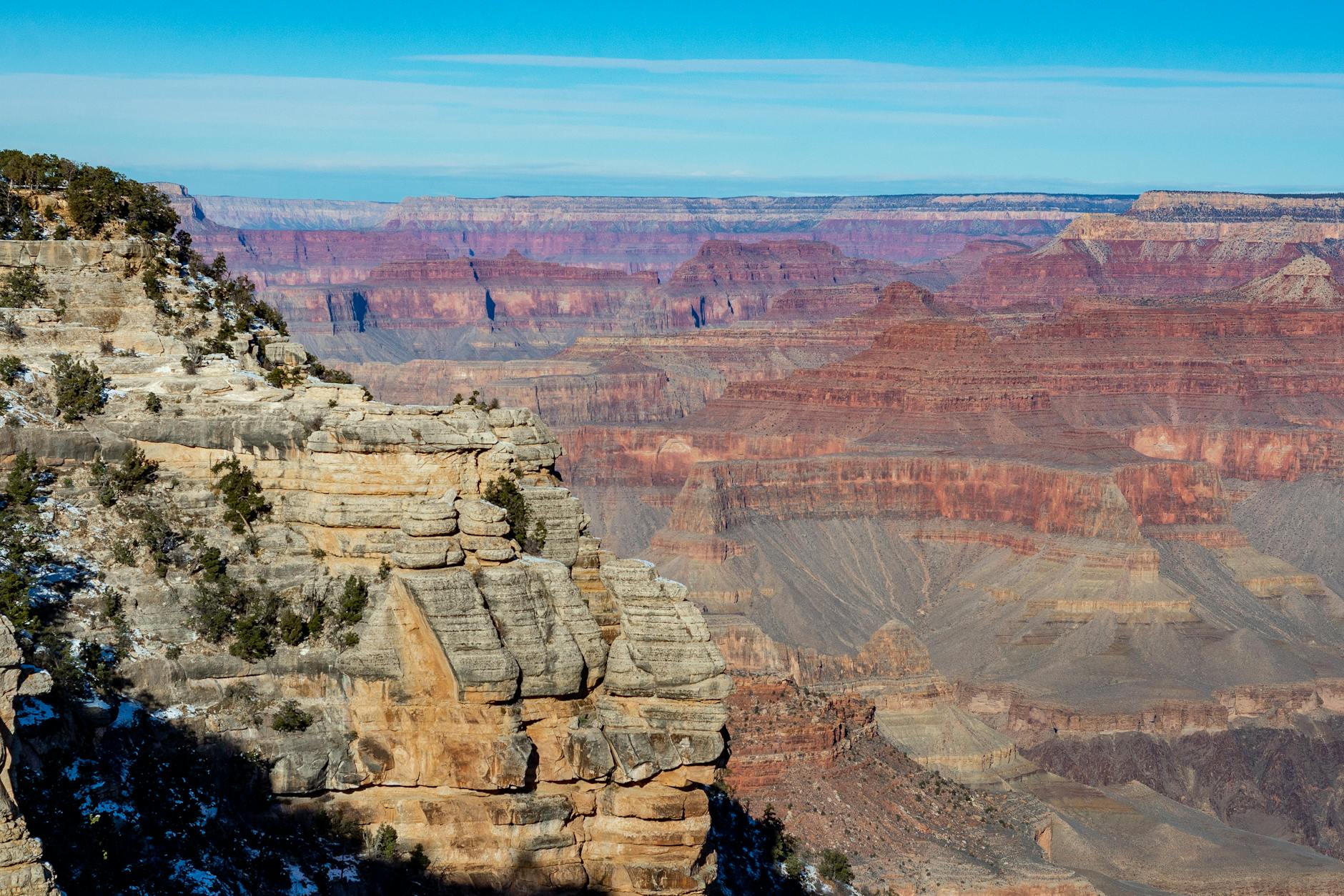
The area outside Moab, Utah, is one of the more well-known BLM zones in the country, and for good reason — red rock canyons, desert mesas, and views that rival anything inside nearby Arches National Park, all accessible for free from dispersed camping areas along roads like the Kane Creek corridor and the Moab Rim. It gets busy in peak season, but the sheer scale of the land absorbs crowds better than any park campground.
Southern Utah more broadly — the areas around Escalante, Capitol Reef, and the Arizona Strip — contains some of the most dramatic and least-visited landscape in North America, much of it BLM land with dispersed camping allowed across huge swaths of territory.
In Nevada, the Black Rock Desert north of Reno is BLM land so vast and flat that it hosts Burning Man once a year and still has room for tens of thousands of people to camp without bumping into each other. Outside of festival season, it's one of the more surreal and empty places you can spend a night in the continental US.
Eastern Oregon and southern Idaho contain river corridors, high desert plateaus, and hot spring areas — some of them completely undeveloped and sitting on public BLM land — that see a fraction of the traffic of the Pacific Crest or the Oregon coast.
The Unwritten Rules That Keep It Working
Dispersal camping culture runs on a set of norms that aren't legally mandated but are socially enforced by the people who use these areas regularly. The Leave No Trace principles are the baseline: pack out trash, bury human waste properly if there are no facilities, don't cut live vegetation, and don't build new fire rings where none existed.
Beyond that, experienced BLM campers generally follow a few informal conventions. Camp on surfaces that are already disturbed — existing pullouts, established dirt clearings — rather than flattening new vegetation. Keep noise down in a way that respects the fact that other people came out here specifically for quiet. And if a spot looks like it's been loved a little too hard — trash rings, scarred ground, trampled plants — consider moving on and letting it recover.
The 14-day limit exists for a reason. Some people push against it by moving a short distance and restarting the clock, which is technically legal but frowned upon by long-term users who've watched certain areas slowly degrade from semi-permanent informal occupations.
How to Find Your Own Spots
The BLM's own website has maps of its land holdings by state, and apps like Gaia GPS and onX Backcountry overlay public land boundaries over satellite imagery in a way that makes it easy to identify BLM parcels. The app iOverlander crowdsources dispersed camping spots with user reviews and photos. Searching Reddit communities focused on overlanding or van life will surface specific regional knowledge faster than almost anything else.
A basic setup — a tent, sleeping bag, water filter, and a cooler — is all you technically need. Car camping on BLM land is genuinely accessible to anyone with a vehicle and a free weekend.
The American West has always been defined in part by the idea of open land and the freedom to move through it. It turns out that idea isn't entirely mythological. A lot of it is still out there, still free, and still waiting for anyone who knows to look.