The Seat the Airlines Hope You Never Think to Ask For
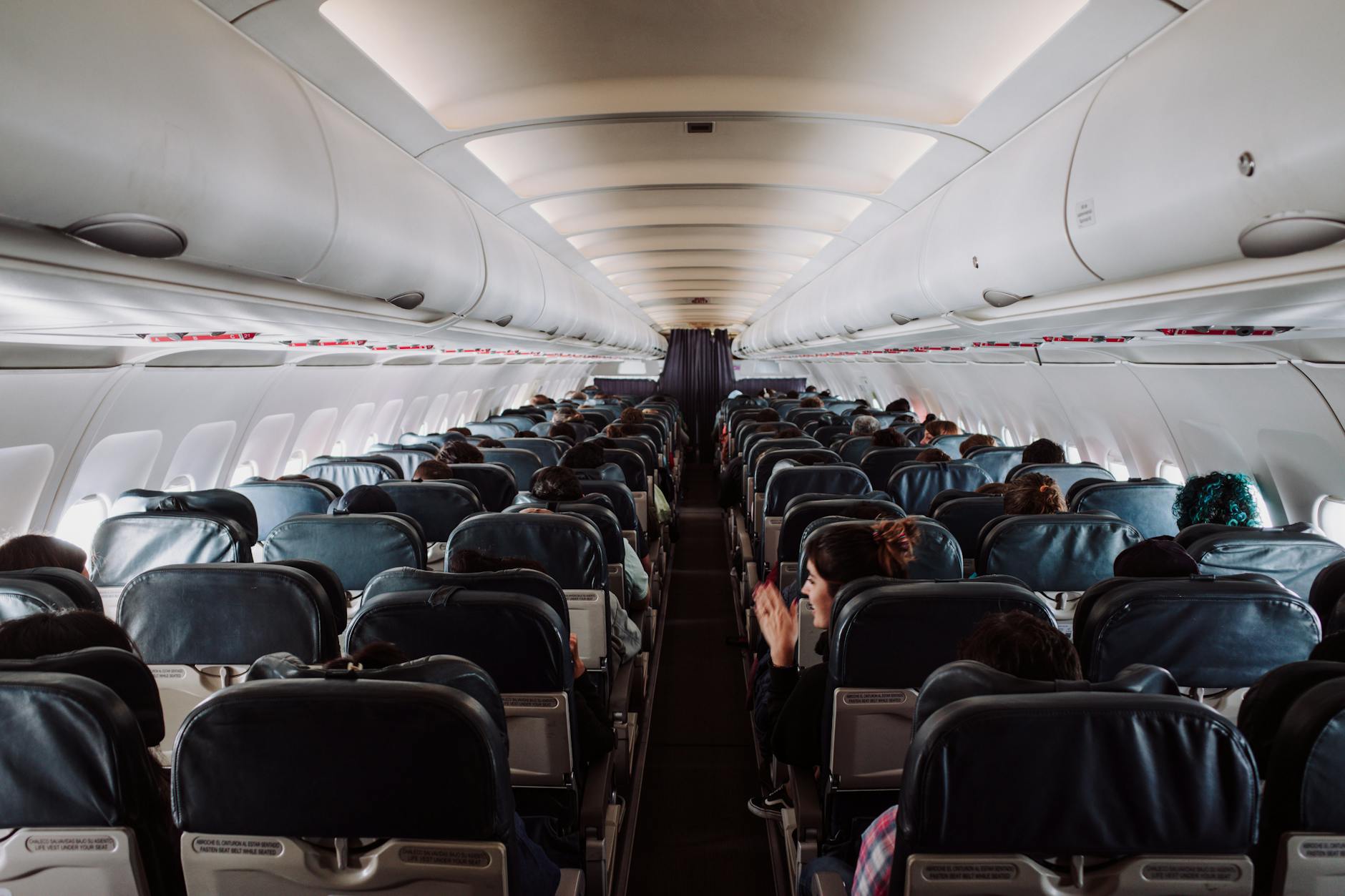
The Dirty Secret of Airplane Seating
Every time you book a flight, you're making a decision with incomplete information. The airline shows you a seat map, maybe a color-coded upgrade prompt, and a price difference that implies a clear hierarchy: pay more, sit better. What that map doesn't show you is the physics.
Aircraft seating is one of those topics where a little bit of counterintuitive knowledge completely changes how you think about every booking going forward. And once you understand the logic, you'll probably never default-select whatever seat the algorithm hands you again.
Why the Front of the Plane Isn't Always the Answer
First class and business class have obvious advantages — more space, better food, a lie-flat bed on long-hauls. Nobody's arguing with that. But for the vast majority of travelers who aren't expensing a transatlantic upgrade, the real question is: within economy, where do you actually want to sit?
Most people gravitate toward the front of the cabin. Fewer rows to walk past, faster boarding exit, closer to the exit door. It's intuitive. It's also not necessarily the most comfortable option.
Here's the physics part: commercial aircraft pivot around a point called the center of lift, which sits roughly above the wings. The further you sit from that point — either toward the nose or the tail — the more you feel the rotational movement of the plane. Turbulence, in particular, gets amplified at both ends of the fuselage the same way the ends of a seesaw move more than the middle.
Frequent flyers who log serious miles figured this out a long time ago. Aviation forums like FlyerTalk have threads going back years on the subject, with road warriors specifically targeting rows over or just behind the wing for smoother rides on bumpy routes.
The Sweet Spot Most Travelers Walk Right Past
On most narrow-body aircraft — your Boeing 737s and Airbus A320s, which handle the bulk of domestic US flying — the wing rows typically fall somewhere between rows 10 and 20, depending on the specific configuration. On wider long-haul planes like the 777 or 787, the principle holds but the exact rows shift.
The practical sweet spot that keeps coming up among experienced travelers isn't the front of the wing — it's the area just behind it, roughly the last few rows of the over-wing section. Why? A few reasons stack up nicely.
First, you still get the stability benefit of being near the aircraft's center of gravity. Second, you're typically close to a wing exit door, which means faster deplaning in the event of an emergency and, more practically, faster exit during normal arrivals. Third — and this one surprises people — the engines on most commercial jets are mounted under the wings, and sitting behind them rather than directly beside them noticeably reduces engine noise exposure.
Rows directly beside the engines get a consistent noise complaint in seat review databases like SeatGuru. Sitting three to five rows behind them tends to be meaningfully quieter without sacrificing the stability advantage.
The Aisle vs. Window Argument (With a Twist)
This debate has been running since commercial aviation started, and both sides have legitimate points. Window seats give you something to lean against, control over the shade, and a view. Aisle seats give you easier bathroom access and the ability to stretch one leg without climbing over anyone.
But there's a third option that frequent flyers mention more than you'd expect: the bulkhead row. These are the rows directly behind a cabin divider — think the row right behind first class, or the row behind an exit section. They usually offer extra legroom at no upgrade cost, and on many aircraft, the seats in front of them don't recline into your space because there's a wall there instead.
The catch is that bulkhead rows often don't have underseat storage, so your carry-on goes in the overhead bin. For people who pack light and like legroom, it's a trade worth making. For people who need their bag accessible during the flight, less so.
Boarding Strategy Changes the Equation Too
Where you sit and when you board are connected in ways that affect your actual comfort. If you're in that mid-plane sweet spot but you board last, your overhead bin space is gone and your bag ends up three rows back. The efficiency gain of the seat gets partially canceled out.
The workaround that experienced travelers use is simple: check in exactly 24 hours before departure when online check-in opens, grab your preferred seat, and board in the first general boarding group — not because you need to sit down faster, but because you need overhead bin space directly above your row.
On Southwest, where open seating still applies, the boarding position number is everything. The travelers who understand this pay for EarlyBird check-in or check in the moment the 24-hour window opens, not to get a "good" seat in the abstract, but to get a specific seat in a specific zone.
The Booking Move That Costs Nothing
Here's the practical takeaway: before your next flight, look up your specific aircraft on SeatGuru (free, takes 90 seconds) and identify the rows that fall just behind the wing exits. Cross-reference with any seats flagged for reduced recline, limited storage, or proximity to lavatories — all of which SeatGuru color-codes.
Then pick the cleanest option in that mid-plane zone, ideally an aisle seat if you're on a flight over two hours.
You haven't paid for an upgrade. You haven't gamed any loyalty system. You've just used information the airline didn't hand you — and on a bumpy flight through mountain weather or summer storm systems, you'll feel the difference in a way that's genuinely hard to argue with.