The Arizona Town That Tried to Live Underground — and Almost Pulled It Off
The Arizona Town That Tried to Live Underground — and Almost Pulled It Off
Most people have heard of Coober Pedy — the Australian opal-mining town where residents literally moved underground to escape 120-degree heat, carving out homes, churches, and even hotels beneath the desert floor. What almost nobody knows is that a similar experiment quietly unfolded in the American Southwest nearly a century ago, in a drought-hammered corner of the country where the heat was just as merciless and the options were just as few.
It didn't make national headlines. It didn't get a documentary. But for a brief, strange window in the early twentieth century, a small cluster of residents in the sun-scorched borderlands of Arizona dug down instead of building up — and what they left behind is one of the more overlooked footnotes in American domestic history.
When the Ground Was the Only Shade Available
By the 1920s, parts of rural Arizona were experiencing what settlers described in letters and local newspaper accounts as "unlivable summers." Daytime temperatures regularly pushed past 110 degrees Fahrenheit. Adobe construction helped, but only so much. Swamp coolers hadn't yet become widespread. Mechanical air conditioning was a luxury reserved for department stores in big cities, not small agricultural communities clinging to existence in the high desert.
A few resourceful residents — some of them miners already familiar with digging, others simply at the end of their rope — began excavating into hillsides and soft sandstone bluffs. These weren't crude dugouts in the pioneer sense. Some were surprisingly deliberate: rooms with plastered walls, ventilation shafts, even rudimentary furniture carved directly from the rock. The earth, it turned out, maintained a remarkably stable temperature of around 55 to 65 degrees just a few feet below the surface — a natural air conditioning system that cost nothing and required no electricity.
Local accounts from the period suggest that at its peak, somewhere between a dozen and two dozen families in one particular community had either fully relocated underground or were using subterranean rooms as sleeping quarters during the hottest months. It wasn't glamorous. But it worked.
Why the Idea Never Spread
So why didn't underground living catch on across the Southwest the way it did in Australia?
A few forces conspired against it. The arrival of affordable evaporative coolers in the 1930s gave most families a cheaper, less labor-intensive alternative — you didn't have to excavate your entire home if you could bolt a swamp cooler to a window frame. Federal housing programs of the New Deal era also pushed standardized above-ground construction, both through direct building projects and through the loan structures that incentivized conventional homes. Underground dwellings didn't fit neatly into any mortgage category, which made financing them essentially impossible.
There was also a social dimension. In a country where homeownership was increasingly tied to a particular aesthetic — the tidy frame house, the visible front porch — living underground carried a stigma. Neighbors whispered. County officials weren't sure how to assess the properties for tax purposes. The people who'd dug in quietly moved back above ground as soon as they could afford to.
What's Still There
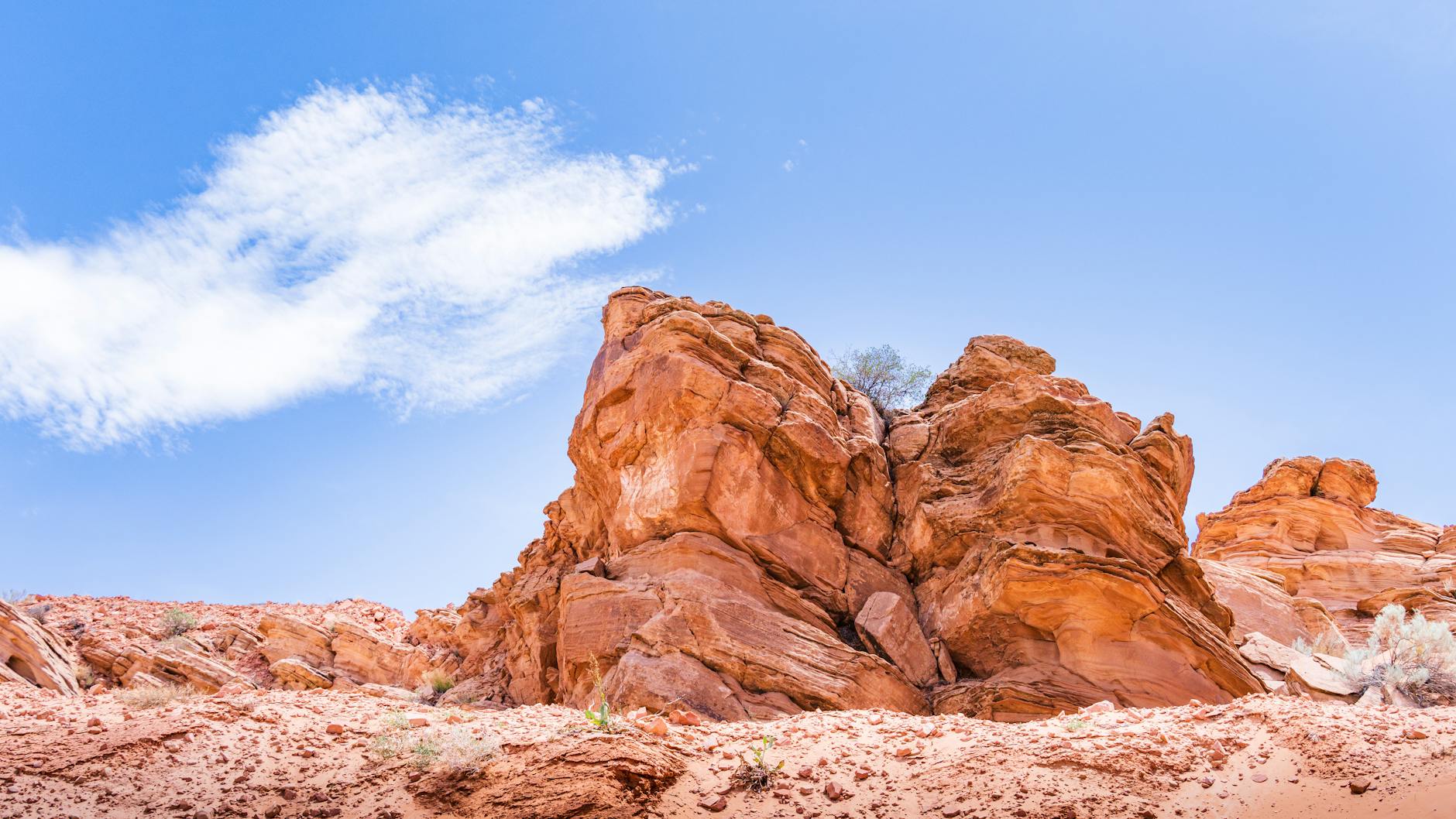
A handful of physical remnants survive, though you won't find them on any official historic register. Erosion and development have claimed most of the original structures, but a few carved-out chambers remain visible in certain sandstone formations in rural Maricopa and Yavapai counties — if you know where to look and who to ask. Local historical societies in the region have documented some oral histories, though the subject tends to get lumped in with general pioneer hardship narratives rather than recognized as the architectural curiosity it actually is.
One partially intact example — a two-room underground dwelling with a collapsed ventilation shaft — was photographed by a regional archaeologist in the 1980s and described in an obscure journal of vernacular architecture. It's the closest thing to a primary record that exists.
The Quiet Revival Happening Right Now
Here's where the story gets genuinely interesting for the present day. Underground and earth-sheltered housing is experiencing a low-key resurgence among off-grid communities across the American West and Midwest — and the reasons are almost identical to what drove those Arizona families underground a hundred years ago.
Modern "earthship" builders in New Mexico have been constructing partially subterranean homes for decades, using the thermal mass of the earth to dramatically cut heating and cooling costs. In states like Montana, Idaho, and even parts of Texas, a growing number of homesteaders are excavating hillside "hobbit homes" — a term that's become common shorthand in off-grid forums — that maintain comfortable interior temperatures year-round with minimal energy input.
The engineering has improved considerably. Waterproofing membranes, modern ventilation systems, and better understanding of soil load-bearing capacity have removed many of the practical obstacles that made early underground homes damp, unstable, or poorly aired. And with energy costs rising and extreme heat events becoming more frequent across the Southwest, the thermal logic that those Arizona residents stumbled onto is looking less eccentric and more prescient with every passing summer.
A Forgotten Idea Worth Remembering
There's something quietly remarkable about the fact that a group of ordinary people in a forgotten corner of Arizona independently arrived at the same solution that ancient civilizations, Australian miners, and modern off-grid builders have all rediscovered: sometimes the smartest place to live is just a few feet below the surface.
They didn't have access to research papers or architectural theory. They had heat, desperation, and sandstone. And for a brief moment, they figured something out that the rest of the country wasn't ready to hear.
It might finally be ready now.