America's Lost Weekend Ritual: When Driving Nowhere Was the Perfect Way to Spend Sunday
The Weekly Escape That Defined American Weekends
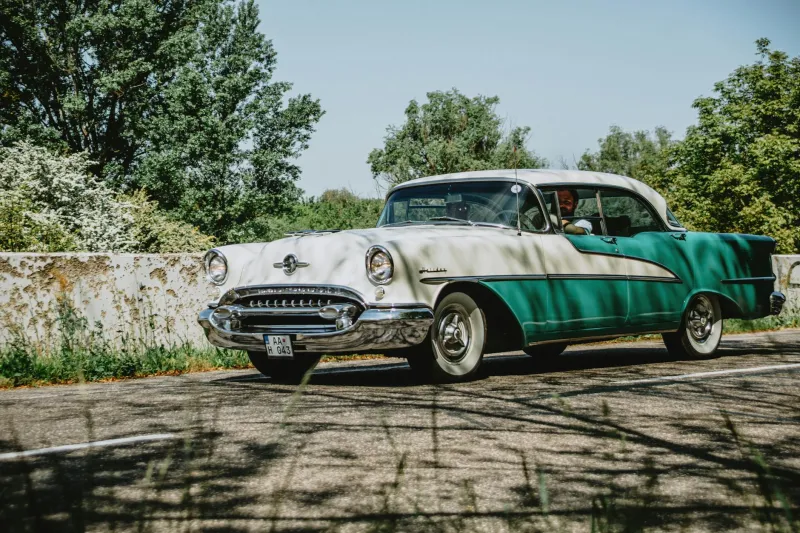
Every Sunday after church, families across America would pile into their cars for what might seem like the most pointless activity imaginable: driving around with absolutely nowhere to go. No GPS coordinates, no restaurant reservations, no tourist attractions on the agenda. Just the open road, rolling windows, and the simple pleasure of watching the countryside unfold at 35 miles per hour.
This wasn't procrastination or boredom—it was the Sunday drive, a weekly ritual so ingrained in American culture that entire communities built their economies around it.
When Going Nowhere Was Going Somewhere
The Sunday drive peaked between the 1920s and 1960s, when car ownership exploded but interstate highways hadn't yet turned every trip into a race against time. Families would spend entire afternoons meandering through back roads, stopping at roadside stands for fresh corn, pulling over at scenic overlooks that seemed designed for exactly this purpose, and discovering small towns they never knew existed just twenty minutes from home.
"It was about the journey being the destination," explains transportation historian Margaret Chen, who has studied America's driving culture. "People understood that sometimes the best discoveries happen when you're not looking for anything specific."
This wasn't just a quaint family activity—it was serious business for rural communities. Towns along popular Sunday driving routes built entire strips of roadside attractions: ice cream stands shaped like giant cones, miniature golf courses with elaborate themes, and "scenic overlooks" complete with picnic tables and telescopes. These weren't accidents of commerce; they were carefully planned pit stops for Sunday drivers who had time to notice them.
The Architecture of Aimless Wandering
Drive through rural America today, and you'll still see the remnants of Sunday drive culture hiding in plain sight. Those inexplicably wide shoulder areas on winding back roads? Built for Sunday drivers to pull over safely and admire the view. The clusters of antique shops, fruit stands, and cafes that seem randomly scattered along scenic routes? They're the descendants of Sunday drive destinations.
Some towns went all-in on the tradition. New Hampshire's Kancamagus Highway, Pennsylvania's River Road, and California's Pacific Coast Highway weren't just transportation routes—they were entertainment, carefully designed with curves that revealed new vistas and pullouts positioned at the most photogenic spots.
"These roads were engineered for lingering," notes landscape architect David Morrison. "Modern highways are designed to get you from Point A to Point B as efficiently as possible. Sunday drive routes were designed to make you forget there was ever a Point B."
The Interstate Interruption
The tradition began its slow fade in the 1970s as interstates made long-distance travel faster and gas prices made aimless driving feel wasteful. Sunday afternoons filled up with organized activities—youth sports, shopping mall trips, television programming specifically designed for weekend viewing. The idea of spending precious free time just "driving around" started to feel indulgent, even irresponsible.
But the infrastructure remained. Those scenic byways didn't disappear; they just got forgotten, bypassed by faster routes that prioritized efficiency over experience.
The Quiet Revival
Something interesting is happening on America's back roads. A growing number of drivers are rediscovering the lost art of purposeless cruising, often stumbling into it accidentally during pandemic-era local exploration or while avoiding congested highways.
"I started taking these random back roads to avoid traffic, and I realized I was actually enjoying the drive more than my destination," says Portland resident Sarah Kim, who now plans weekly "nowhere drives" with her family. "My kids have started asking to take 'the pretty way' instead of the fast way."
Several states have quietly begun promoting their old Sunday drive routes again, though they're careful not to call them that. Vermont's "scenic byways," Ohio's "heritage trails," and Wisconsin's "rustic roads" programs are essentially Sunday drive routes rebranded for modern travelers who need official permission to drive slowly.
Finding the Routes That Time Forgot
The best Sunday drive routes are hiding in plain sight, often running parallel to major highways. Look for roads marked with "scenic route" signs, state highway numbers instead of interstate designations, or routes that seem to take the long way around natural features instead of cutting straight through them.
Many of these roads still have their original Sunday drive infrastructure intact: the wide shoulders, the strategically placed overlooks, the clusters of small businesses that seem designed for impulse stops rather than destination visits.
The Art of Getting Lost on Purpose
The Sunday drive taught generations of Americans that not every journey needs to be optimized, that sometimes the most memorable discoveries happen when you're not trying to discover anything at all. In our GPS-guided, time-optimized world, that might be the most radical idea of all: that getting lost can be exactly where you need to be.
Next Sunday, consider taking the long way home. You might find that the journey really can be the destination—and that America's back roads have been waiting patiently for your return.