The American Towns That Refused to Set Their Clocks — And Started a Time War
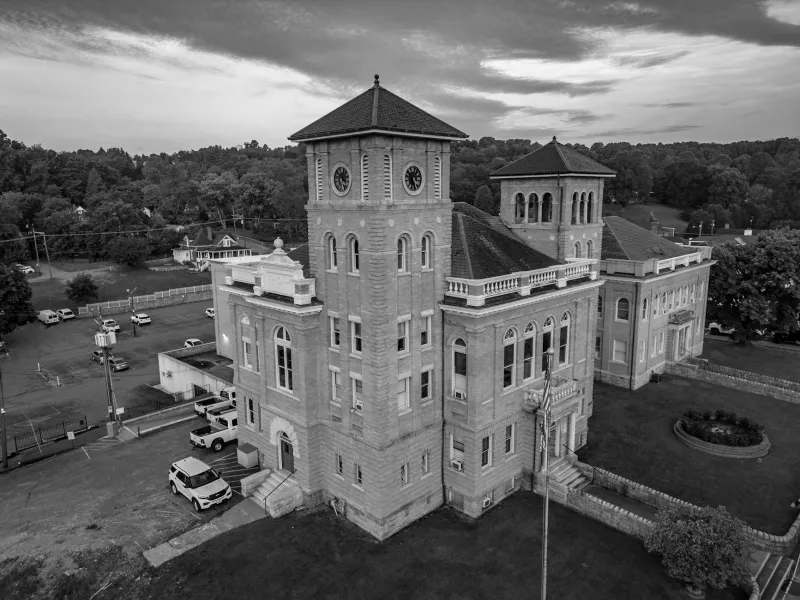
On November 18, 1883 — a date railroad companies dubbed "The Day of Two Noons" — most of America synchronized their clocks for the first time in the nation's history. But in the small farming town of Belleville, Kansas, Mayor William Henderson stood on the courthouse steps at exactly 12:00 PM local sun time and declared that his community would not be "enslaved by railroad time."
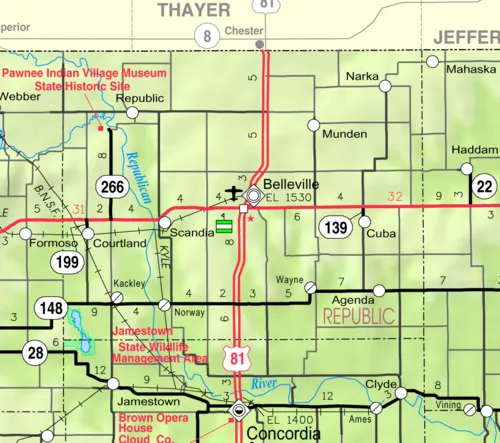 Photo: Belleville, Kansas, via upload.wikimedia.org
For the next 47 years, Belleville operated on two different time systems simultaneously. The train depot ran on Central Standard Time. Everything else — schools, churches, businesses, and city government — stubbornly kept sun time, which ran about 23 minutes behind the railroad schedule.
Belleville wasn't alone in its temporal rebellion. Across America, dozens of communities waged quiet wars against standardized time, creating a chaotic patchwork of competing clocks that persisted well into the 20th century.
When America Ran on 100 Different Times
Before 1883, American communities set their clocks by the sun, which meant that local noon occurred when the sun reached its highest point in the sky. This created thousands of slightly different local times — Chicago ran about 10 minutes behind New York, while San Francisco lagged nearly three hours behind the East Coast.
For isolated farming communities, this system worked perfectly. But for railroads trying to run coordinated schedules across vast distances, it was a logistical nightmare. Train crashes caused by scheduling confusion became increasingly common as rail networks expanded.
The solution was Standard Time: four uniform time zones that would govern railroad operations nationwide. Railroad companies announced that on November 18, 1883, all their clocks would simultaneously reset to the new system.
The Great Time Rebellion
While most major cities adopted railroad time immediately — they depended too heavily on train commerce to resist — smaller communities had different calculations. Many saw standardized time as an assault on local autonomy and natural rhythms.
"It was about more than clocks," explains Dr. Michael O'Malley, author of "Keeping Watch: A History of American Time." "These communities viewed sun time as God's time, natural time. Railroad time felt artificial and imposed."
The resistance took various forms. In Detroit, city council passed an ordinance requiring all public clocks to show local sun time, even though the railroads and many businesses had switched to Central Standard Time. For years, Detroit operated split between "fast time" and "slow time," with different parts of the city literally living in different temporal realities.
Georgia refused to adopt Eastern Standard Time until 1888, preferring to maintain Columbus time — which ran about 23 minutes behind the railroad schedule. Nebraska communities were particularly stubborn; some counties didn't fully abandon local sun time until World War I made time coordination a matter of national security.
Living in Two Times at Once
The practical consequences of temporal resistance were often absurd. In counties where some towns used railroad time and others stuck with sun time, scheduling became a daily puzzle. Church services, school sessions, and business meetings required careful specification of which time system applied.
Court records from the era document numerous legal disputes arising from time confusion. A particularly famous case in Ohio involved a contract dispute where one party claimed a meeting occurred "at 3 PM" — but never specified which 3 PM. The case dragged through appeals for two years before judges ruled that local business custom determined which time system applied.
Newspapers developed elaborate systems for publishing dual schedules. The Belleville Telescope ran two separate time listings for decades — "Sun Time" for local events and "Railroad Time" for train departures and arrivals. Wedding invitations and funeral notices routinely specified both times to avoid confusion.
The Holdouts' Last Stand
Most time resistance collapsed during World War I, when federal coordination requirements made time uniformity a patriotic duty. But a few communities held out even longer. The farming town of Vevay, Indiana, didn't fully abandon sun time until 1936, when New Deal agricultural programs required synchronized record-keeping.
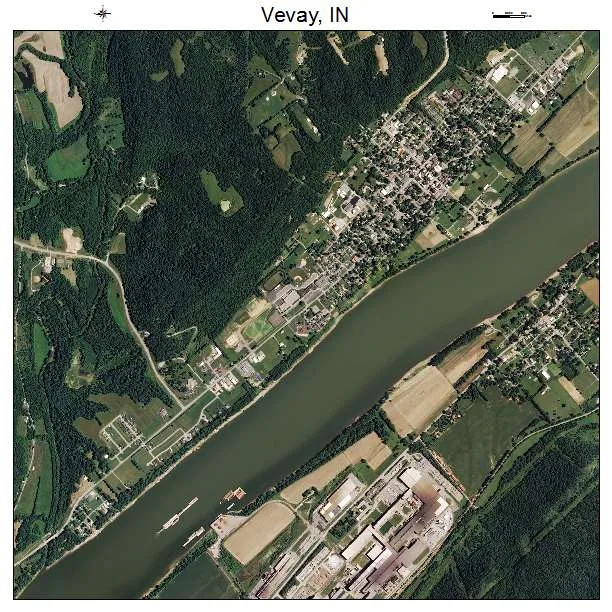 Photo: Vevay, Indiana, via www.landsat.com
Interestingly, the longest resistance came from religious communities that viewed natural time as spiritually significant. Several Amish settlements in Pennsylvania and Ohio continued using sun time for religious observances well into the 1940s, creating parallel temporal systems where secular activities followed standard time but worship and community events followed the sun.
Time Wars and Modern Life
The great American time rebellion offers surprising insights for contemporary debates about temporal organization. The holdout communities weren't simply being stubborn — they were defending local rhythms and natural cycles that had governed human activity for millennia.
Modern chronobiology research suggests the time rebels may have had a point. Studies show that human circadian rhythms align more closely with local solar time than with standardized time zones, particularly at the edges of time zones where the gap between sun time and clock time is greatest.
Some researchers studying seasonal affective disorder and sleep disruption have begun advocating for more localized time systems — essentially a return to the pre-1883 model, but coordinated through digital technology rather than abandoned entirely.
The Clock Tower's Last Stand
Today, only a few physical reminders of America's time wars remain. The courthouse clock in Belleville, Kansas, still bears a small plaque commemorating the town's 47-year resistance to railroad time. A handful of historical societies maintain "sun time" clocks as curiosities.
But the deeper legacy of temporal rebellion lives on in America's complicated relationship with time zones. Daylight Saving Time remains deeply unpopular in many rural areas — often the same regions that once resisted railroad time. The current movement to abandon time changes and adopt permanent standard time echoes arguments made by 19th-century sun time advocates.
The stubborn towns that refused to set their clocks may have lost their temporal war, but they preserved an important question: who gets to decide what time it is, and why should we all agree to live by the same clock?